Malaysia FDI Boom Masks EV, Data Centre Policy Whiplash — SkimNews
Get the Finance newsletter
Daily finance — markets, central banks, M&A, the prints that move money. Free.
- Malaysia approved FDI hit a record RM207 billion (US$50.5 billion) in 2024, with Google, Microsoft, Amazon, and ByteDance pouring billions into data centres in Johor's Kulai corridor and EV brands from BYD to Tesla capitalising on a four-year import tax exemption.
- Malaysia's EV import tax exemptions expired in December 2025; new rules kicking in from July 2026 require imported EVs to carry a CIF value of at least RM200,000 and minimum power output of 180 kW, thresholds that effectively exclude mass-market Chinese models priced between RM50,000 and RM70,000.
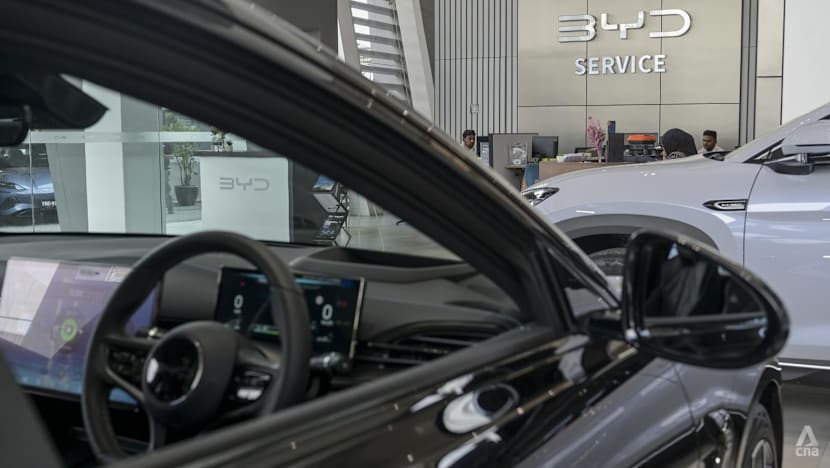
- BYD Malaysia will not proceed with its original plans for a completely knocked-down (CKD) assembly plant in Tanjung Malim, Perak, though it remains in discussions on local assembly cooperation — a visible casualty of the policy shift.
- New CKD rules require entrants to export up to 80% of locally assembled vehicles, with only 20% allocated for the domestic market, reshaping the economics of local manufacturing.
- Malaysia's government acknowledged in May 2026 that it may have gone too far in data centre incentives and is now filtering for "high-quality industry players" among remaining unrealised investments as power and water infrastructure strain under hyperscaler demand.
- Malaysia's H1 2026 approved investment still reached RM218.5 billion with foreign investment at RM126.9 billion (roughly 58%), but the commentary warns each reversal raises the country's risk premium and degrades capital quality over time.
- The Bumiputera equity policy, dating from the 1971 New Economic Policy, continues to constrain foreign ownership in certain regulated sectors and makes major industrial-policy changes politically difficult for the Anwar Ibrahim administration.
Why it matters: Each policy reversal compounds Malaysia's risk premium: investors demand higher returns to compensate for unpredictable rules, which over time degrades the quality — not quantity — of capital flowing in, favouring footloose subsidy-seekers over long-term ecosystem builders. BYD's pulled Tanjung Malim plant is the first concrete signal that headline FDI growth and on-the-ground investor behaviour are diverging.
Ask SkimNews