Scientists found the brain doesn’t start blank, it starts full — SkimNews
SkimNews Take
The brain's initial overabundance of connections suggests that developmental learning is less about forming new links and more about optimizing existing ones through selective removal.
Get the Health newsletter
Daily health & science — research, biotech, public health, the studies worth knowing. Free.
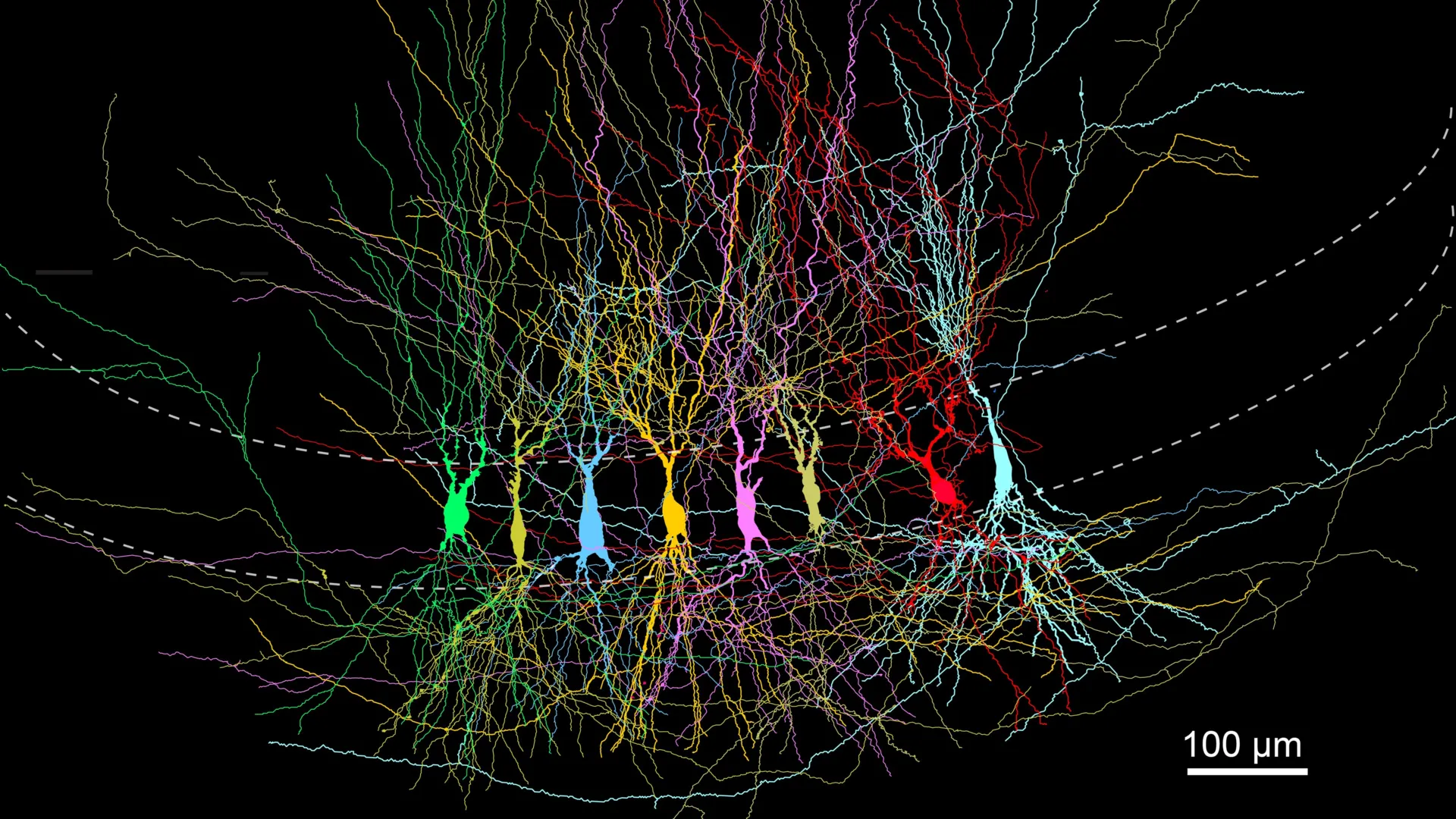
- Peter Jonas led the ISTA team that published the findings in Nature Communications, revealing a dense CA3 network in mice at post‑natal days 7‑8.
- Victor Vargas‑Barroso recorded electrical activity from CA3 pyramidal neurons across three developmental windows—days 7‑8, 18‑25, and 45‑50—using patch‑clamp and laser imaging.
- CA3 pyramidal neurons transition from a crowded, random connectivity pattern at birth to a pruned, high‑efficiency wiring by adulthood, enabling faster memory encoding.
Why it matters: Not enough in the article to say why this matters.
Ask SkimNews