Brain Evolved From Two Merged Ancient Nervous Systems — SkimNews

Get the Health newsletter
Daily health & science — research, biotech, public health, the studies worth knowing. Free.
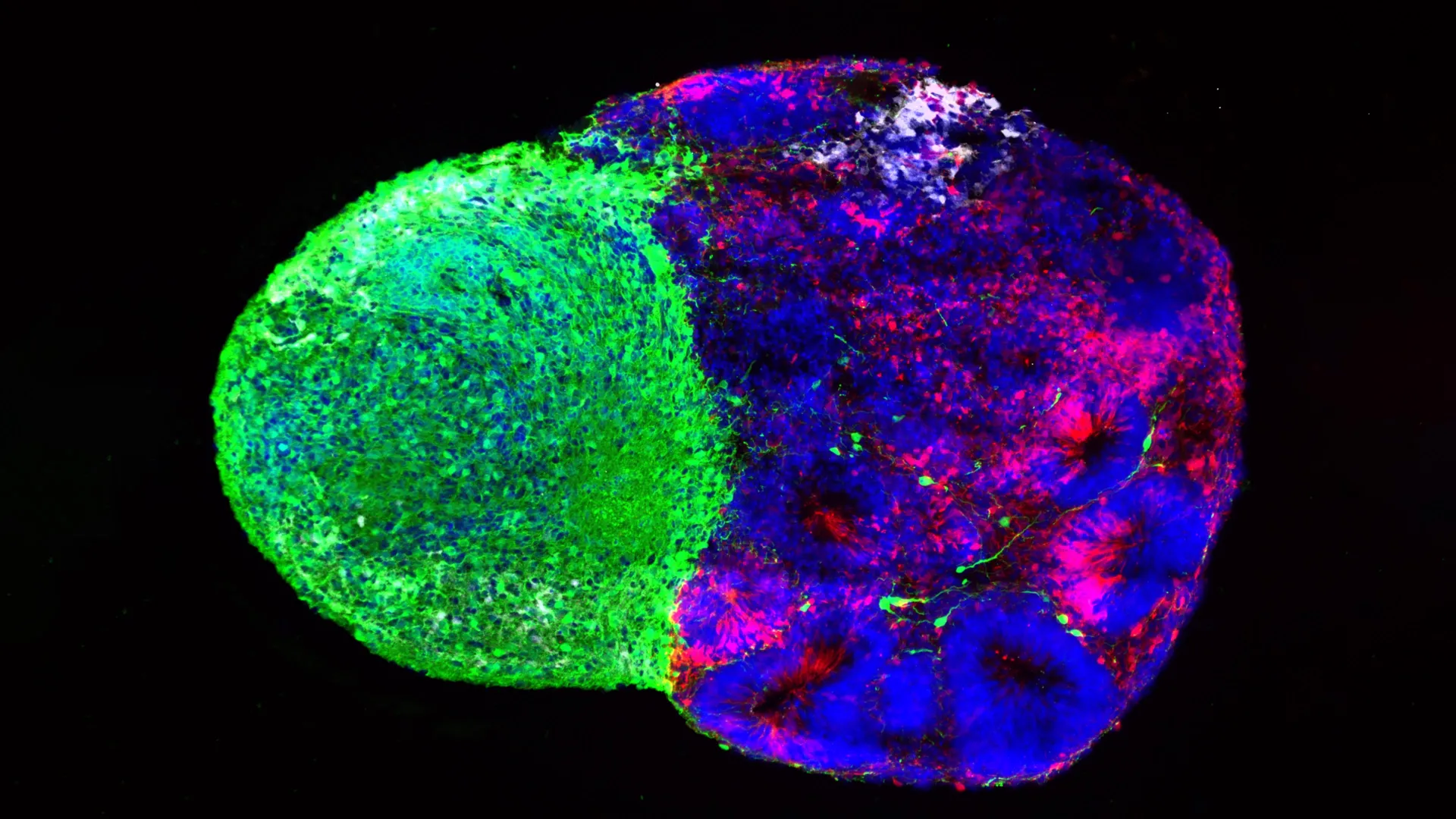
- Kyle Loh at Stanford University found that the forebrain and midbrain develop from progenitor cells expressing the gene OTX2, while the hindbrain develops from a separate population expressing GBX2—a pattern confirmed in mouse, human, chicken, zebrafish, and acorn worm embryos.
- The two-origin architecture dates back at least 550 million years, according to the study in Nature Neuroscience; jellyfish, which humans diverged from 600-700 million years ago, still carry two entirely separate nervous systems.
- Using the correct hindbrain progenitor cell type, the team grew functional human hindbrain motor neurons in a dish for the first time—a breakthrough triggered by a summer student's failed experiment that exposed why prior labs had been working from the wrong starting cells.
- The new ability to culture hindbrain neurons should accelerate research into ALS and spinal muscular atrophy, diseases that kill hindbrain motor neurons controlling speech and swallowing.
- Cultured hindbrain neurons also open a window onto how GLP-1 drugs like Ozempic and Wegovy suppress appetite, since recent mouse studies showed these drugs act directly on hindbrain circuits.
- Loh argues the dual-origin setup freed the forebrain to evolve higher cognition: while the hindbrain handled breathing, sleeping, and heartbeat, "evolution could play around with the forebrain" to produce memory and creativity.
Why it matters: Researchers can now grow human hindbrain motor neurons in a dish for the first time, creating human-cell models for ALS, spinal muscular atrophy, and the appetite-suppression pathways of GLP-1 drugs like Ozempic and Wegovy—diseases and mechanisms that previously had no workable laboratory system.
Ask SkimNews