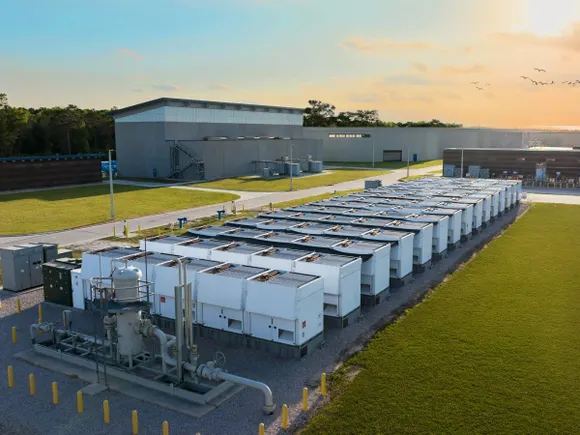
Climavision offers expanded weather forecasting to data centers — SkimNews
Get the Energy newsletter
Daily energy & climate — solar, EVs, oil, the policy fights and tech bets shaping the transition. Free.
- Climavision opened its network of 31 radars across 15 states to data centers beginning Sept. 10, expanding its subscription forecasting service beyond its existing utility, power-producer, and government clients.
- CEO Chris Goode said the company's radars fill coverage gaps in federal NEXRAD monitors, whose recording beams only reach above 10,000 feet, leaving all lower-altitude atmospheric data invisible to the public system.
- The service combines Climavision's radar data with public datasets, commercial sources, and customer sensors to deliver "high-resolution forecasts for specific wind farms, substations or campuses rather than regional averages," per the company's release.
- Goode said the tools could help data centers avoid grid curtailment during tight weather conditions by activating on-site generation, storage, demand response, or fuel-switching instead of pulling harder from the grid.
- Lawrence Berkeley National Laboratory research cited in the piece found that better solar forecasts yield a 30% reduction in the spare generation capacity utilities must hold to account for forecast errors.
- Climavision has worked with CenterPoint Energy since Winter Storm Uri (2021) to harden infrastructure and prepare for severe weather, including Winter Storm Fern in January.
- Radar coverage includes PJM Interconnection states Kentucky, North Carolina, Pennsylvania, and Tennessee, plus Louisiana, Georgia, and Mississippi—states where Meta, OpenAI, and Amazon are investing billions for data centers.
Why it matters: Hyperscale data centers in Climavision's coverage footprint—where Meta, OpenAI, and Amazon are pouring billions—gain a forecasting edge to dodge weather-driven grid curtailment. Lawrence Berkeley National Laboratory research cited in the piece pegs the upside at a 30% reduction in spare generation utilities hold for solar forecast errors, a margin that matters as hyperscale loads tighten the same PJM and Southeast grids Climavision's radars watch.
Ask SkimNews