Turning Commercial Buildings Into Grid Flexibility — SkimNews
Get the Energy newsletter
Daily energy & climate — solar, EVs, oil, the policy fights and tech bets shaping the transition. Free.
- Interconnection queues show only 13% of generation and storage capacity entered over the last two decades reached commercial operation by end of 2025, with 75% withdrawn — underscoring why utilities are turning to existing building flexibility instead of new infrastructure.
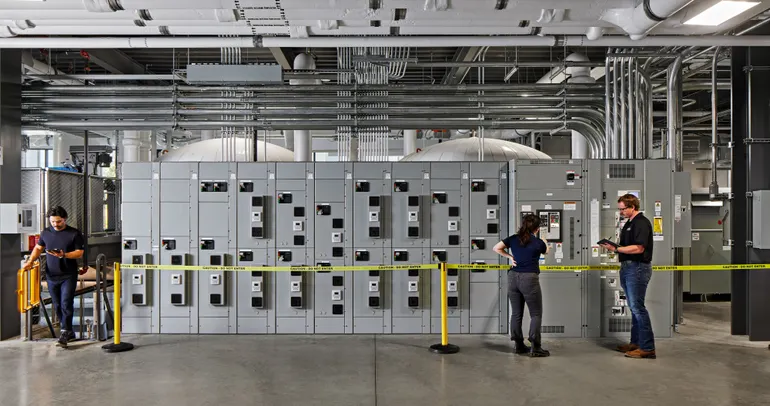
- Commercial buildings account for up to 35% of U.S. energy consumption, and much of that load is flexible, representing a largely untapped resource for relieving local grid constraints.
- McKinstry (Jesse Sycuro, VP of Operations) and Edo (Jesse Rebello, Managing Director) are partnering to automate demand flexibility; Edo went from signing a utility contract to a live demand-flex event in under eight weeks.
- Capacity payments in high-congestion grid zones can run up to five times higher than in low-strain areas, making a building's location — not just its size — the biggest economic lever for demand flexibility programs.
- Building data analytics can surface hidden waste far beyond the flexibility use case, with one college campus discovering snow-melt gutter heaters running all summer after data tools flagged the anomaly.
- Facility teams must retain tenant-comfort guarantees and an opt-out option, Sycuro said: 'Program success comes down to a true partnership with the facilities team.'
Why it matters: For utilities staring at an interconnection backlog where 75% of queued projects never get built, commercial buildings offer a faster, cheaper path to dispatchable capacity — and Edo's sub-eight-week deployment timeline shows the model can scale without new transmission. Building owners in congested zones can capture up to 5x higher capacity payments while using the same data layer to cut wasted energy.
Ask SkimNews