Japan White Paper Names China Top Security Challenge

Get the Geopolitics newsletter
Daily geopolitics — wars, elections, sanctions, the diplomatic moves that move markets. Free.
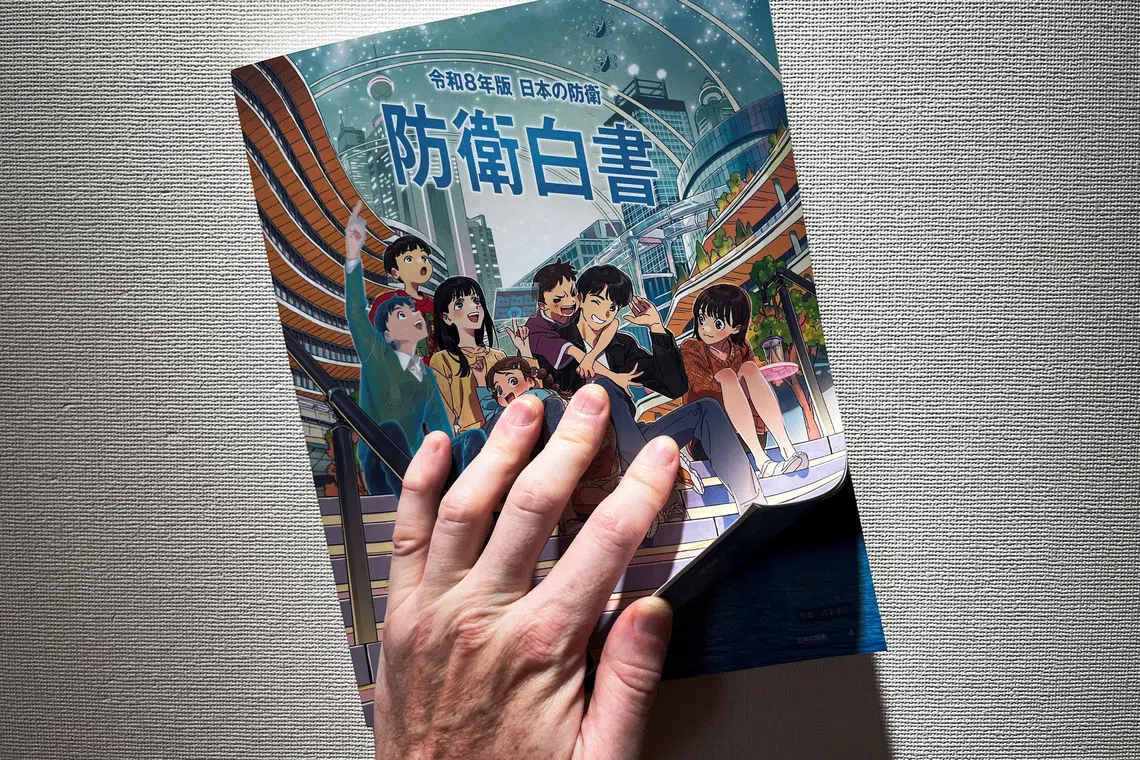
- Japan's cabinet-approved defense white paper (August 4, 2026) named China's growing military actions as Tokyo's top security challenge, calling for response through "overall national strength and cooperation with allies and like-minded nations" across a roughly 600-page assessment.
- Chinese Foreign Ministry spokesperson Lin Jing lodged a "serious diplomatic" protest, calling the paper's Taiwan comments "brazen interference" in China's internal affairs and rejecting any Japanese role in resolving the Taiwan question.
- Japan tested a new anti-ship missile with a range of about 1,000 km coinciding with the white paper's release, advancing its push to field indigenous long-range stand-off missiles deployable from land, sea, and air.
- Defense Minister Shinjiro Koizumi pledged to build a "multi-layered network of allies and like-minded nations" and increase Indo-Pacific deterrence, while the paper reiterated Japan's three non-nuclear principles.
- Koizumi separately opened the door to revisiting the decades-old non-nuclear pledge — not producing, possessing, or hosting nuclear arms — calling the nuclear weapons debate one "we cannot avoid."
- Current tensions trace to November 2025, when PM Sanae Takaichi told parliament a Taiwan contingency could be a "survival-threatening situation" for Japan that may require military action in support of the United States; the white paper says Japan must "keep a close watch" on Taiwan stability.
Why it matters: Japan is advancing conventional strike capabilities (the ~1,000 km missile test debuted the same day as the paper) while Koizumi signals the nuclear debate is no longer taboo — a dual departure from the post-war restraint doctrine. Beijing's sharp protest shows the diplomatic bill for that pivot is already arriving, and the Senkaku/Diaoyu patrols plus Taiwan contingency language keep a live flashpoint on the table.