China EV Adoption Cuts Pollution, Saves 262,000 Lives — SkimNews
Get the Energy newsletter
Daily energy & climate — solar, EVs, oil, the policy fights and tech bets shaping the transition. Free.
- Nature Health study used high‑resolution satellite air‑quality data and machine learning to compare actual pollution in 150 Chinese cities with a counterfactual scenario where all vehicles remained internal‑combustion.
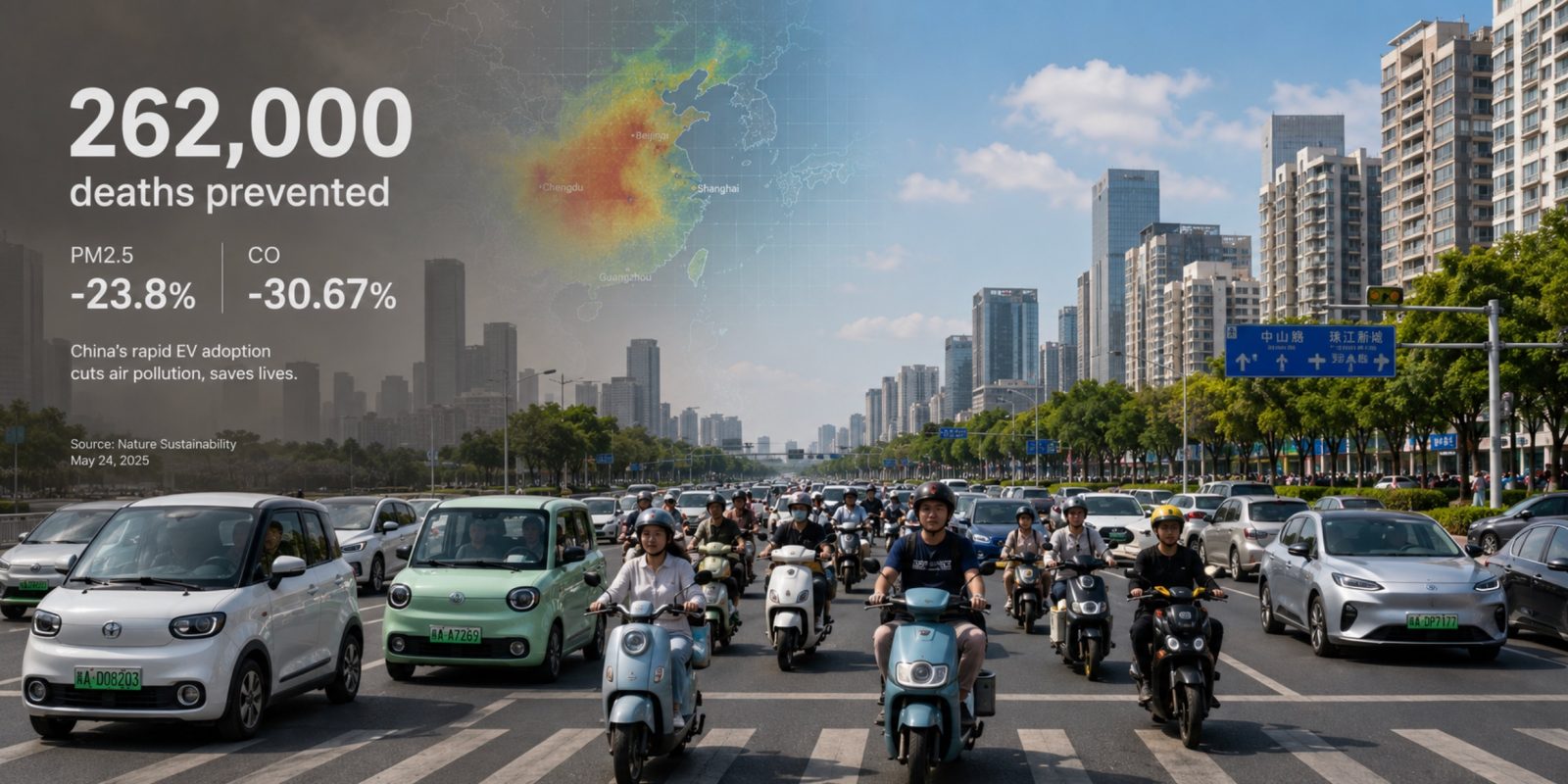
- NEVs (new‑energy vehicles) reduced fine particulate matter (PM2.5) by 23.80%, a drop of 8.97 µg/m³, and carbon monoxide by 30.67% by 2023.
- Researchers estimate the air‑quality improvements prevented roughly 262,000 non‑accidental premature deaths and about 75,000 all‑cause deaths.
- Nitrogen dioxide fell by only 1.81 µg/m³, and reductions in coarse particulate matter were low because heavy‑duty diesel trucks remain largely unelectrified.
- Wealthier cities saw the largest health gains, while less‑developed regions experienced smaller improvements.
- University of Southern California team found that in California, each 200 additional zero‑emission vehicles lowered NO₂ concentrations by about 1.1% at 1,700 residential sites between 2019 and 2023.
Why it matters: The study shows that Chinese urban residents have already avoided over a quarter‑million premature deaths, but the modest NO₂ reductions and uneven benefits reveal that heavy‑duty diesel trucks and poorer cities still bear the pollution burden, underscoring the need to accelerate electrification of heavy‑duty trucks to extend health gains.
Ask SkimNews