BRICS New Delhi Declaration Expands Development Mandate — SkimNews

Get the Geopolitics newsletter
Daily geopolitics — wars, elections, sanctions, the diplomatic moves that move markets. Free.
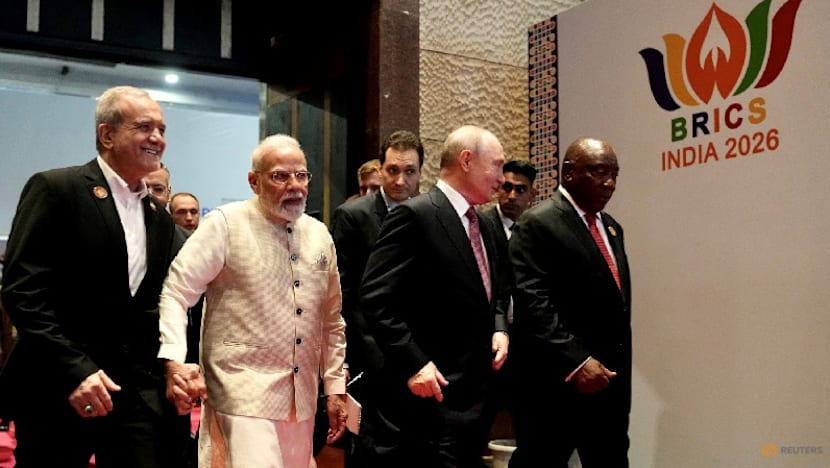
- BRICS adopted the New Delhi Declaration unanimously at the 18th BRICS Summit on September 12, with 130-plus paragraphs — only about a third on geopolitics, the remaining ~100 on health, food security, energy, finance, trade, climate and human development.
- The New Development Bank is described as entering its "second golden decade," with BRICS expanding local-currency lending and courting new members.
- India operationalized its chairmanship theme "Building for Resilience, Innovation, Cooperation and Sustainability" through a dedicated Task Force on Growth and Development.
- The New Delhi Declaration proposes a BRICS Multilateral Guarantees mechanism, a Global Value Chains Action Plan to 2030, a BRICS Grain Exchange, 14 science and technology working groups, and 7 industrial cooperation working groups.
- The declaration's operative language relies on soft verbs — "welcome," "note," "encourage," "look forward to," "acknowledge" — leaving almost everything beyond the New Development Bank a voluntary framework or memorandum with no binding force or deadline.
- Rasul sets three testable benchmarks: whether export data show developing economies climbing value chains by 2030, whether guaranteed borrowing shows measurable spread compression, and whether the Grain Exchange executes a single verifiable trade.
Why it matters: For Global South economies seeking alternatives to Bretton Woods, the New Development Bank's local-currency lending expansion is the only real balance-sheet activity; the 2030 Global Value Chains Action Plan and Grain Exchange remain voluntary frameworks whose value depends on whether BRICS adopts an accountability mechanism before the Chinese chairmanship.
Ask SkimNews