Coacervates Linked to Alzheimer's, Cancer, and Life's — SkimNews

Get the Health newsletter
Daily health & science — research, biotech, public health, the studies worth knowing. Free.
- Coacervates were confirmed to behave as liquids in 2009 when Anthony Hyman's team at the Max Planck Institute for Molecular Cell Biology and Genetics studied P granules; the droplets are now known to be ubiquitous in cells, with the nucleolus — the region that manufactures ribosomes — itself being a cluster of coacervates.
- Alexander Oparin proposed in the 1920s–30s that coacervates were precursors to cells, but the idea was sidelined by the RNA world hypothesis and membrane-vesicle research until biologists confirmed coacervates play key roles in living cells after all.
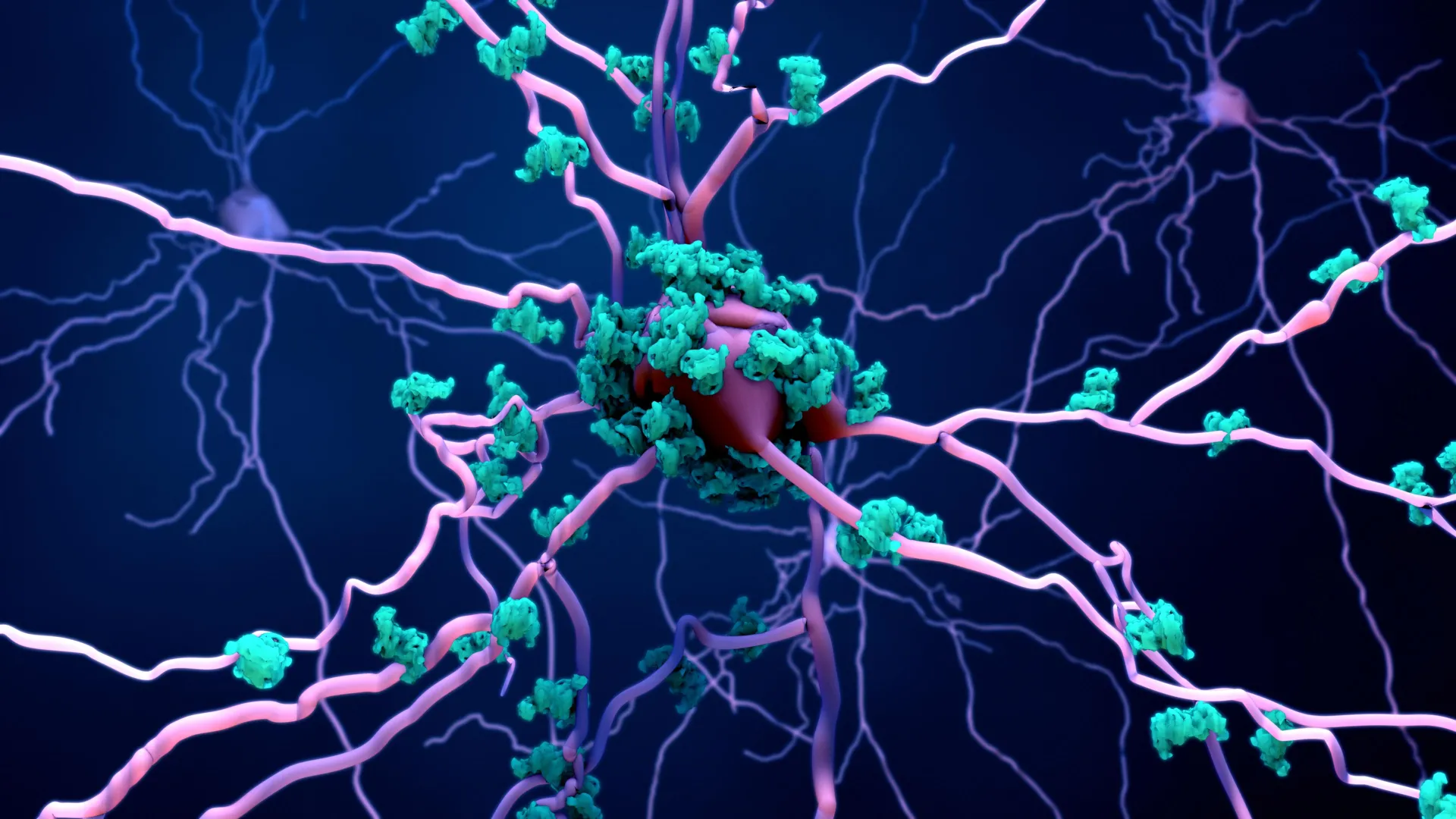
- Coacervates have no outer membrane — Dora Tang at the University of Saarland compares their disordered molecular arrangement to "overcooked spaghetti" — and malfunctioning coacervates are now linked to Alzheimer's (amyloid and tau proteins forming coacervates that cause clumping), cancer (activating tumour-promoting genes), and rapid deterioration of hearts chilled for transplant, where a drug blocking coacervate formation improved heart function in a 2024 study.
- Evan Spruijt's 2021 study at Radboud University showed that a miniature protein of just four amino acids could self-assemble into coacervates, and a 2022 follow-up found the simple peptide oligoarginine could form coacervates with many small molecules, addressing the problem that early Earth would have lacked long-chain molecules.
- Coacervates create concentrated internal microenvironments distinct from the surrounding prebiotic soup, allowing neighbouring droplets of different compositions to drive varied chemical reactions and push simple chemistry toward greater molecular complexity — a core Oparin idea now being experimentally revived.
- The term "coacervate" was coined in 1929 by Hendrik Bungenberg de Jong and Hugo Kruyt studying phase separation, the less-absolute form of unmixing where long-chain molecules clump into spherical droplets that remain largely watery inside.
Why it matters: The convergence of coacervate research across cell biology, prebiotic chemistry, and disease opens a new therapeutic axis: a 2024 drug that blocked coacervate formation improved donated-heart function, and growing evidence tying coacervates to amyloid/tau clumping in Alzheimer's and to tumour-promoting gene activation gives drug hunters a single target class relevant to neurodegeneration, oncology and transplant medicine — not just an academic origin-of-life hypothesis.
Ask SkimNews