SNIPE shreds phage DNA, lets E. coli survive — SkimNews

Get the Health newsletter
Daily health & science — research, biotech, public health, the studies worth knowing. Free.
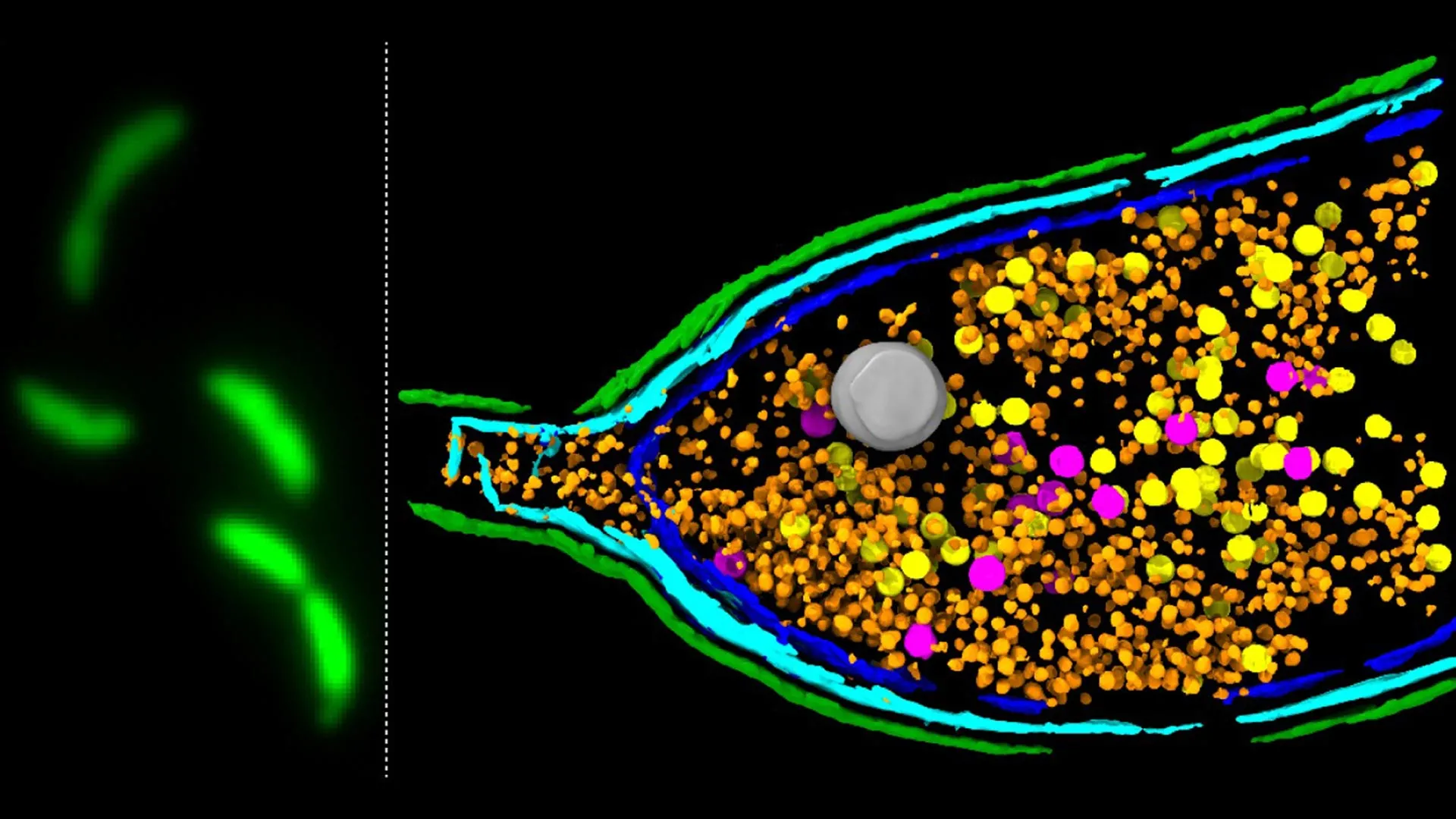
- SNIPE is a newly characterized bacterial defense system in E. coli that cleaves phage genomes into harmless fragments via a nuclease domain anchored in the cell's protective membrane — a location most nucleases don't occupy.
- Daniel Saxton (postdoc, Laub Lab, MIT) led the study published in Nature, demonstrating SNIPE acts as a "direct defense" where the bacterial cell survives — Saxton called it "god-tier protection" after fluorescence experiments showed SNIPE obliterating phage DNA even at "hundreds of phage per cell."
- SNIPE discriminates foreign from host DNA by binding the phage's "tape measure protein" as it tunnels through the membrane; researchers physically demonstrated for the first time that this protein enters the cytoplasm during genome injection.
- SNIPE binds the bacterial membrane protein ManYZ; rerouting injection through an alternate pathway significantly weakens its defense, confirming both proteins' role in the injection process.
- SNIPE is only the third known mechanism that distinguishes bacterial from foreign DNA, joining two previously characterized systems in a category where Saxton says the field is discovering new defenses "at a breakneck pace."
- Michael T. Laub (Salvador E. Luria Professor of Biology, Howard Hughes Medical Institute investigator) co-led the work, with a key experimental design credited to co-author Ian Roney during a lab retreat brainstorming session.
Why it matters: SNIPE is only the third known bacterial mechanism that can tell self-DNA from foreign DNA, and the first anchored at the cell membrane — meaning the host bacterium survives the phage attack rather than self-destructing to block it. With Saxton saying the field is discovering new defense systems "at a breakneck pace," this paper gives researchers a structurally and mechanistically distinct route for understanding the membrane-stage arms race between bacteria and phages.
Ask SkimNews