Bacteria Repurpose Anti-Virus Defenses to Spread Resistance — SkimNews

Get the Health newsletter
Daily health & science — research, biotech, public health, the studies worth knowing. Free.
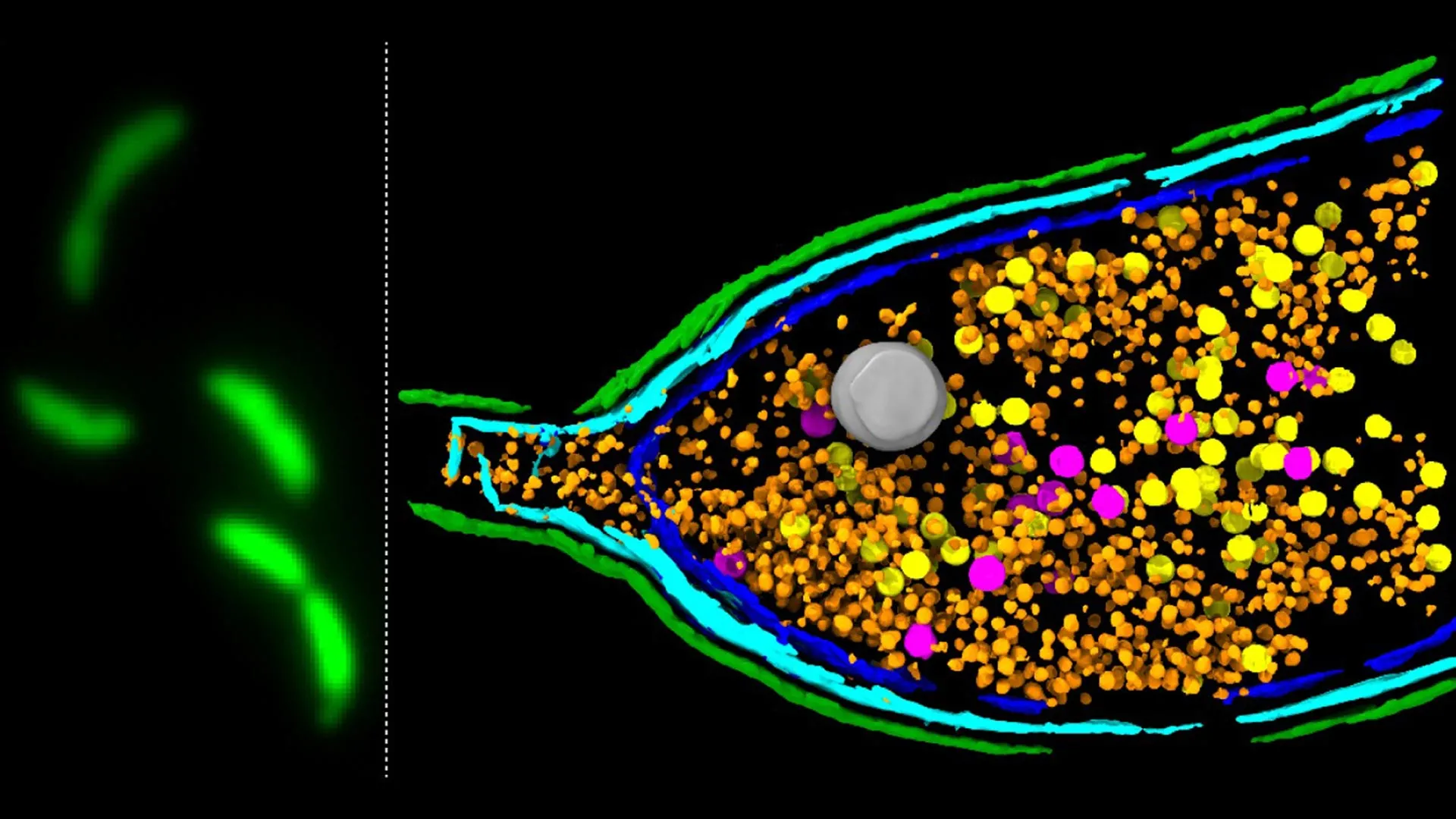
- John Innes Centre researchers used deep sequencing-based screening in Caulobacter crescentus to identify a three-gene control hub, LypABC, that governs cell lysis—the breaking-open step needed to release gene transfer agents (GTAs)
- LypABC resembles a bacterial anti-phage immune system, containing protein domains typically used to defend against viruses, yet has been repurposed to release GTAs for horizontal gene transfer between bacteria
- Deleting the lypABC genes blocked bacteria from lysing to release GTAs, while overexpressing the hub produced a very high proportion of lysing cells—pinpointing it as the control switch
- The team also identified a separate regulatory protein required for strict control of both GTA activation and lysis, since misregulation of LypABC is highly toxic to bacterial cells
- The study, published in Nature Microbiology, was a collaboration between the John Innes Centre, the University of York, and the Rowland Institute at Harvard
- Dr. Emma Banks, first author and Royal Commission for the Exhibition of 1851 Research Fellow, said the finding shows immune systems can be repurposed to help bacteria share DNA—a process that contributes to the spread of antibiotic resistance
Why it matters: The study pinpoints LypABC, a three-gene control hub, as the specific mechanism governing bacterial release of gene transfer agents—giving researchers a concrete molecular handle on how antimicrobial resistance spreads horizontally between cells. The team identifies understanding how LypABC is activated and ruptures cells as the next research step, advancing AMR knowledge from observing gene transfer to mapping its precise control point.
Ask SkimNews