China's SLBM Test Edges Toward Permanent Sea-Based Deterrence
The 30-Second Skim7 points
- What happenedChina's July 6 Pacific SLBM test was less about the missile itself than about demonstrating that Beijing is steadily building the operational foundation for a credible, permanent sea-based nuclear deterrent on par with those of the US, UK, and France.
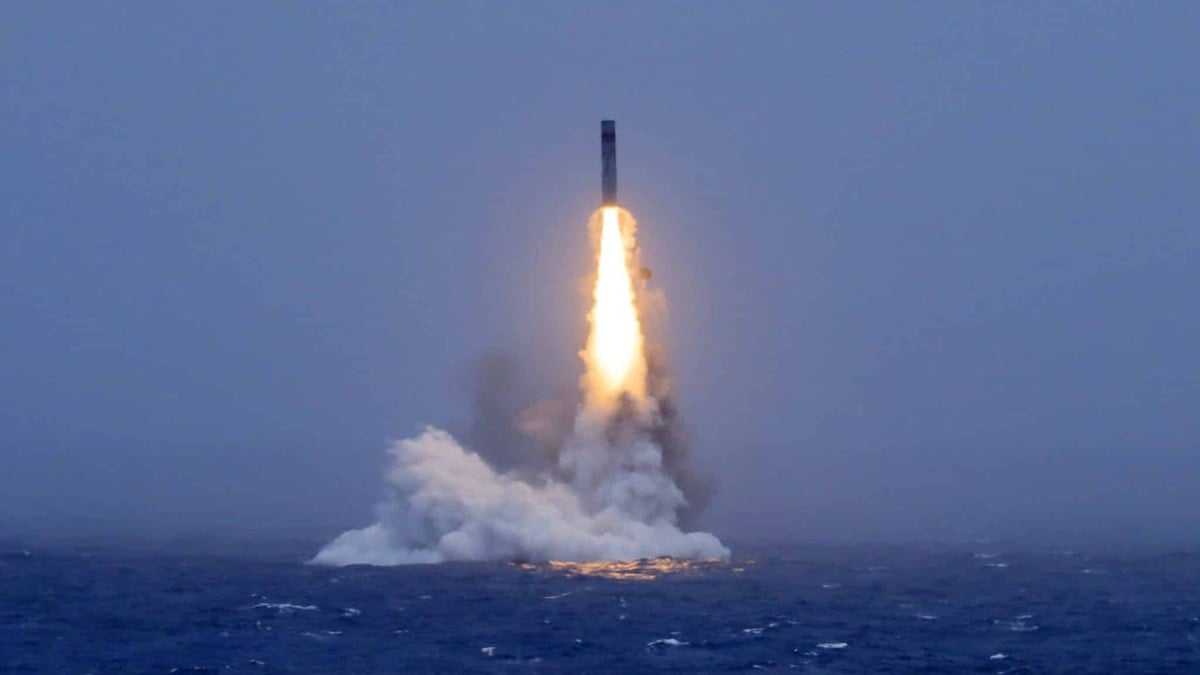
- Key facts & numbersChina's PLA Navy launched an SLBM from a strategic nuclear submarine on July 6 at 12:01 p.m. Beijing time, firing a dummy warhead roughly 7,300 km from the South China Sea into open Pacific waters beyond Japan's exclusive economic zone but inside the broader Treaty of Rarotonga nuclear-free zone. Analysts Étienne Marcuz (FRS) and Alex Luck identify the missile as most likely a JL-2 and the launch platform as a Type 094A SSBN, with Luck calling a Type 096 launch 'no plausible possibility' due to the absence of any indicators those new boats have entered service. Marcuz said the launch had two stated purposes: a technical 'full-range' minimal-energy trajectory test that yielded reentry and accuracy data unobtainable from inland launches, and an operational demonstration that Beijing can mount second-strike attacks from South China Sea and Bohai Gulf submarine 'bastions.'
- What happens nextSneaky detail: China appears to have planned multiple SLBM launches but only fired one. For a 'predictable deterrence' demo, that ambiguity is the real story — not the 7,300 km flight.
- China's PLA Navy launched an SLBM from a strategic nuclear submarine on July 6 at 12:01 p.m. Beijing time, firing a dummy warhead roughly 7,300 km from the South China Sea into open Pacific waters beyond Japan's exclusive economic zone but inside the broader Treaty of Rarotonga nuclear-free zone.
- Analysts Étienne Marcuz (FRS) and Alex Luck identify the missile as most likely a JL-2 and the launch platform as a Type 094A SSBN, with Luck calling a Type 096 launch 'no plausible possibility' due to the absence of any indicators those new boats have entered service.
- Marcuz said the launch had two stated purposes: a technical 'full-range' minimal-energy trajectory test that yielded reentry and accuracy data unobtainable from inland launches, and an operational demonstration that Beijing can mount second-strike attacks from South China Sea and Bohai Gulf submarine 'bastions.'
- Both analysts assessed the test as evidence China is moving toward a sustainable Continuous At-Sea Deterrence posture, with Marcuz envisioning future coordinated ICBM and SLBM launches from Hainan plus H-6N bomber integration resembling Russia's annual strategic-triad exercises.
Why It Matters
Both cited analysts argue transparency, not missile range, is the unresolved variable: Luck pushes for formalizing routine Beijing notification so Pacific governments don't misread launches, while Peters already framed the July 6 shot as inconsistent with the Treaty of Rarotonga — meaning how Beijing manages political fallout will shape whether allied capitals treat its emerging SSBN force as a credible deterrent or as a recurring provocation.
Background & Timeline
- Editor contextContinuous at-sea deterrence means maintaining an SSBN on patrol at all times, forcing China to adopt the same persistent operational tempo — and compressed crisis decision timelines — that have long shaped US and Russian nuclear postures.
Sources Cited
Related Coverage
Ask SkimNews