Pakistan's US funding push after Iran war role draws skepticism from economists
Get the Geopolitics newsletter
Daily geopolitics — wars, elections, sanctions, the diplomatic moves that move markets. Free.
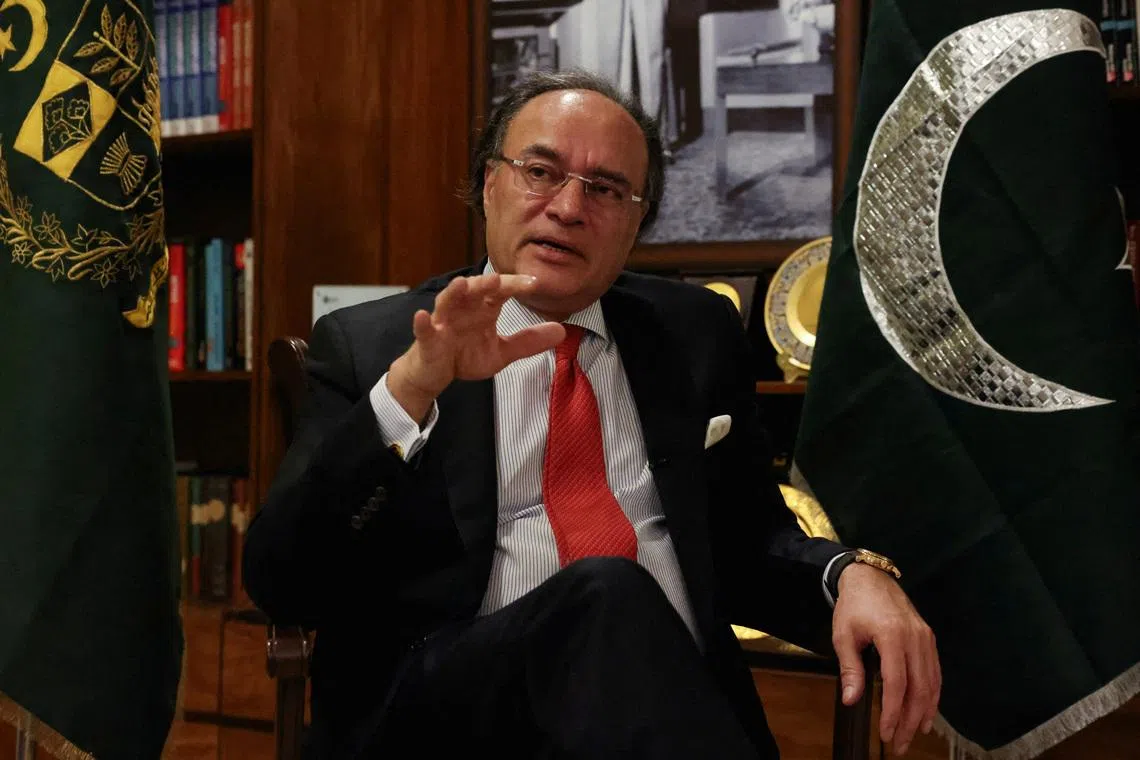
- Pakistan's Finance Minister Muhammad Aurangzeb visited Washington this week requesting a $10 billion U.S. exchange stabilization fund and pitching a separate trade-finance facility with the U.S. EXIM Bank, both aimed at bolstering the rupee and diversifying funding beyond the IMF, China, and Saudi Arabia.
- Adeel Malik, an Oxford associate professor, called the proposed reserve facility "geopolitical rent" following Pakistan's mediation role in the U.S.-Israeli war on Iran, while Capital Economics' Gareth Leather said it would provide a "vital cash cushion" without IMF conditions or the renewals required by Chinese and Saudi deposits.
- S&P Global Ratings upgraded Pakistan to 'B' from 'B-' on Wednesday — its first upgrade in nine years — citing stronger fiscal and institutional settings under Pakistan's $7 billion IMF programme, which still carries politically costly tax rises and spending curbs ahead of elections due by 2029.
- Martin Muehleisen of the Atlantic Council questioned the scale against Pakistan's roughly $138 billion debt pile: "For a country the size of Pakistan, you would talk about a few hundred million dollars; $10 billion is just a different order of magnitude."
- Mark Sobel, a former senior Treasury official now U.S. chair of OMFIF, said Treasury should decline any swap line for Pakistan despite the security alliance, calling the country a "permanent ward" of the IMF that has failed to enact reforms despite years of tough lending conditions.
- The U.S. Treasury secretary's statement praised Pakistan's reforms but stressed "greater economic self-reliance" and made no mention of the $10 billion facility, while EXIM confirmed talks only on a "strategic framework" targeted for signing at the U.N. General Assembly in September.
- Yun Sun of the Stimson Center said Beijing wouldn't oppose U.S. financial help for Pakistan, since China wants it stabilized but doesn't want to remain its sole backer — a rare quiet alignment between Washington and Beijing on Pakistani financing.
Why it matters: Pakistan's $10 billion ask — far above the "few hundred million dollars" economists say fits its $138 billion debt load — faces Treasury silence and skepticism from former U.S. officials who call Islamabad a "permanent ward" of the IMF. Even if approved, CFR's Brad Setser said any funds would likely be conditional on Pakistan staying in an active IMF program, so it would buy reserves, not an exit from the reform cycle.