Europe's Rivers Hit Record Lows, Forcing Nuclear Shutdowns — SkimNews

Get the Energy newsletter
Daily energy & climate — solar, EVs, oil, the policy fights and tech bets shaping the transition. Free.
- The Danube fell to 41cm in Budapest, within 8cm of its 2018 all-time low, stranding passengers between Vienna and Budapest and forcing the evacuation of 186 people from the cruise ship Viking Ullur.
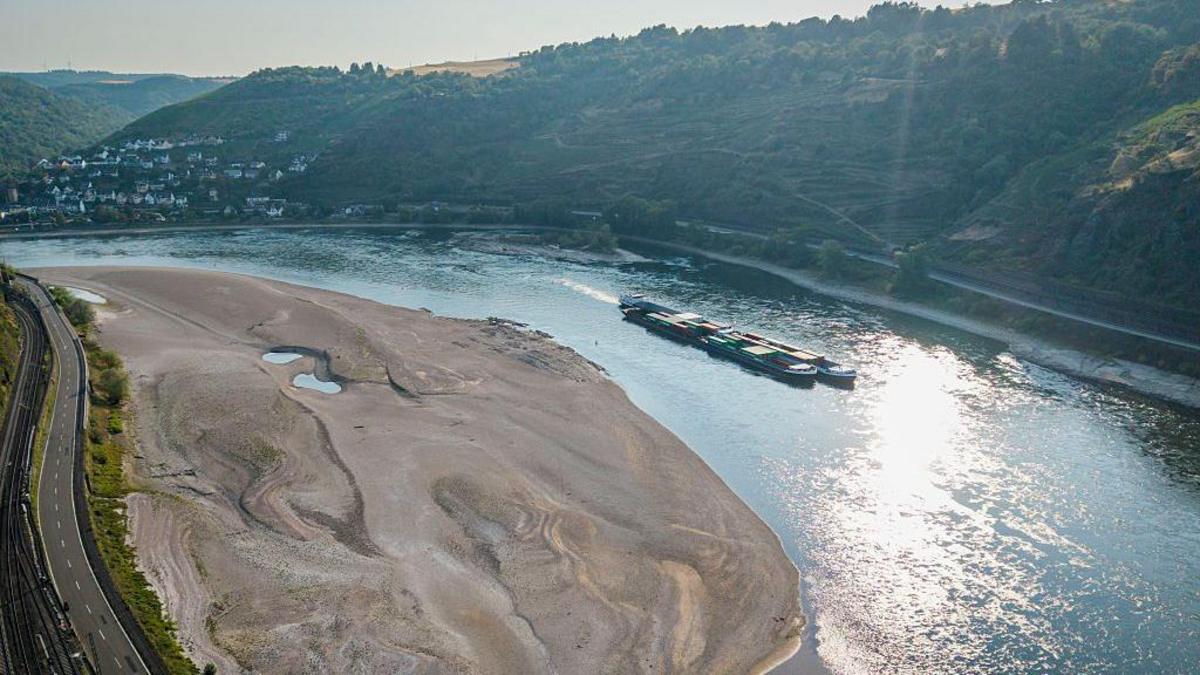
- The Rhine at Kaub dropped to about 40cm, with barges loading as little as a fifth of normal capacity; the Kiel Institute found a single month of low water cuts German industrial production by roughly 1%.
- Romania declared a nationwide state of emergency, shut down nuclear plants beside the Danube for the first time, and detonated 180kg of explosives on the Bala canal to clear a rock obstructing the flow.
- Hungary's Paks nuclear plant — which normally supplies almost half the country's electricity — could be fully shut down within days as the Danube continues to fall.
- A University of Mannheim study with European Central Bank economists found last summer's heatwaves, droughts and floods hit a quarter of EU regions, causing short-term losses of at least €43bn, expected to reach €126bn by 2029.
- France has recorded more than three times its annual average number of wildfires this summer, with Météo-France logging the lowest soil moisture it has ever recorded this early in the season — driven by the same atmospheric mechanism drying out the rivers.
- The phrase 'once-in-a-century summer' — used by Germany's weather service in 2018 — has been dropped from official vocabulary after seven consecutive years of records, with droughts now arriving earlier every season.
Why it matters: The article argues the centuries-old framing of these droughts as exceptional no longer holds: Romania has already shut nuclear reactors for the first time over river levels, Hungary's Paks plant faces imminent closure, and a single low-water month costs Germany ~1% of industrial output. The rivers that carried Europe's coal, iron ore and grain — and underwrote a shared Mitteleuropa identity — are now a structural economic vulnerability, not a crisis that will pass with the weather.
Ask SkimNews