UCLA Finds Metabolism and Thalamic Touch Direct Brain Stem Cells — SkimNews
Get the Health newsletter
Daily health & science — research, biotech, public health, the studies worth knowing. Free.
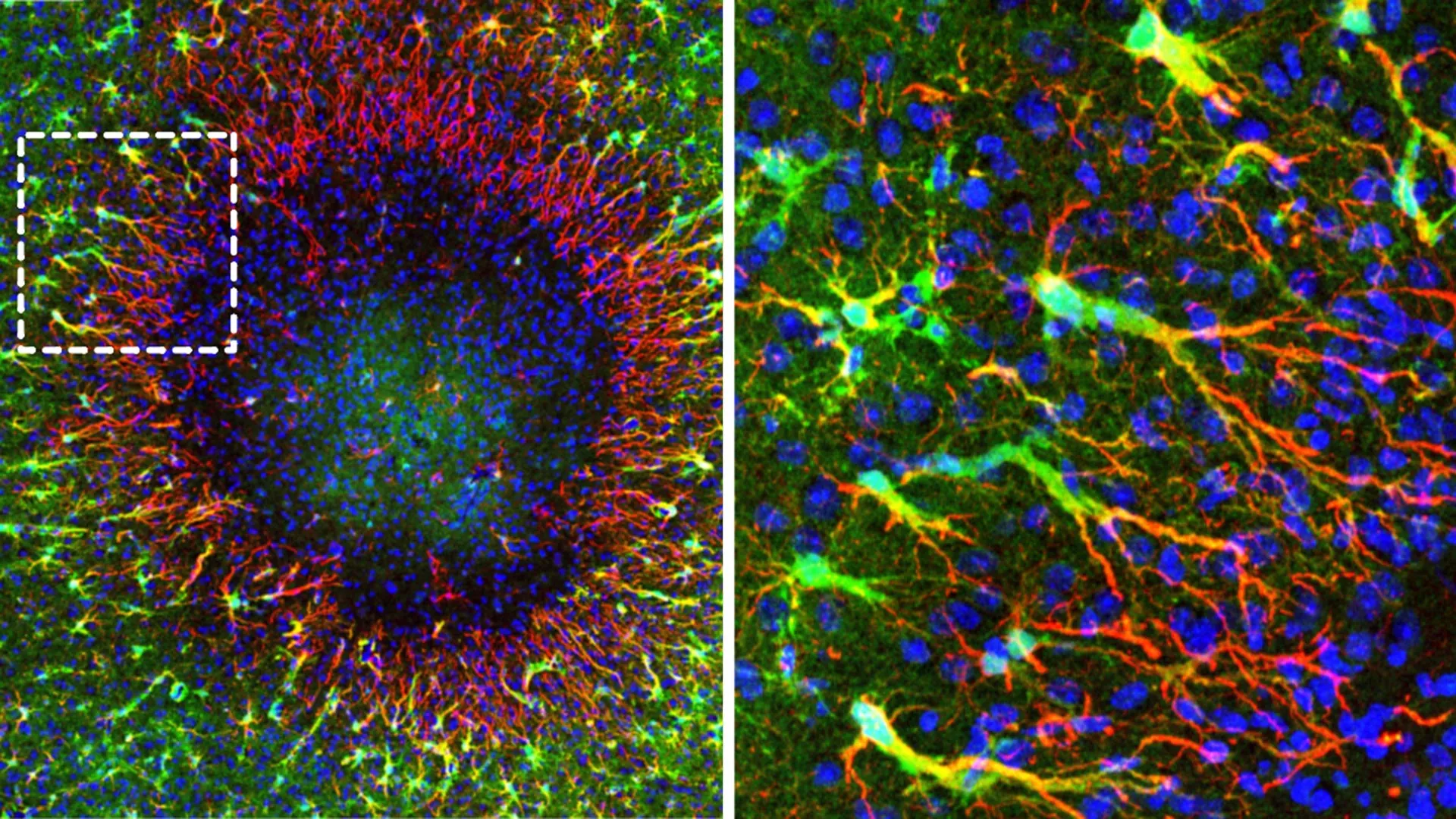
- UCLA researchers published two companion studies (in Cell and Science) showing that radial glia process two distinct kinds of information — glucose metabolism and physical contact from thalamic projections — to guide cell-fate decisions in the developing human cortex.
- The Cell study, led by co-first authors Jessenya Mil and Jose Soto in collaboration with Heather Christofk's lab, mapped metabolism in the developing human cortex and found radial glia depend heavily on the pentose phosphate pathway; disrupting glucose or this pathway pushed stem cells toward inhibitory neurons and later-stage cell types.
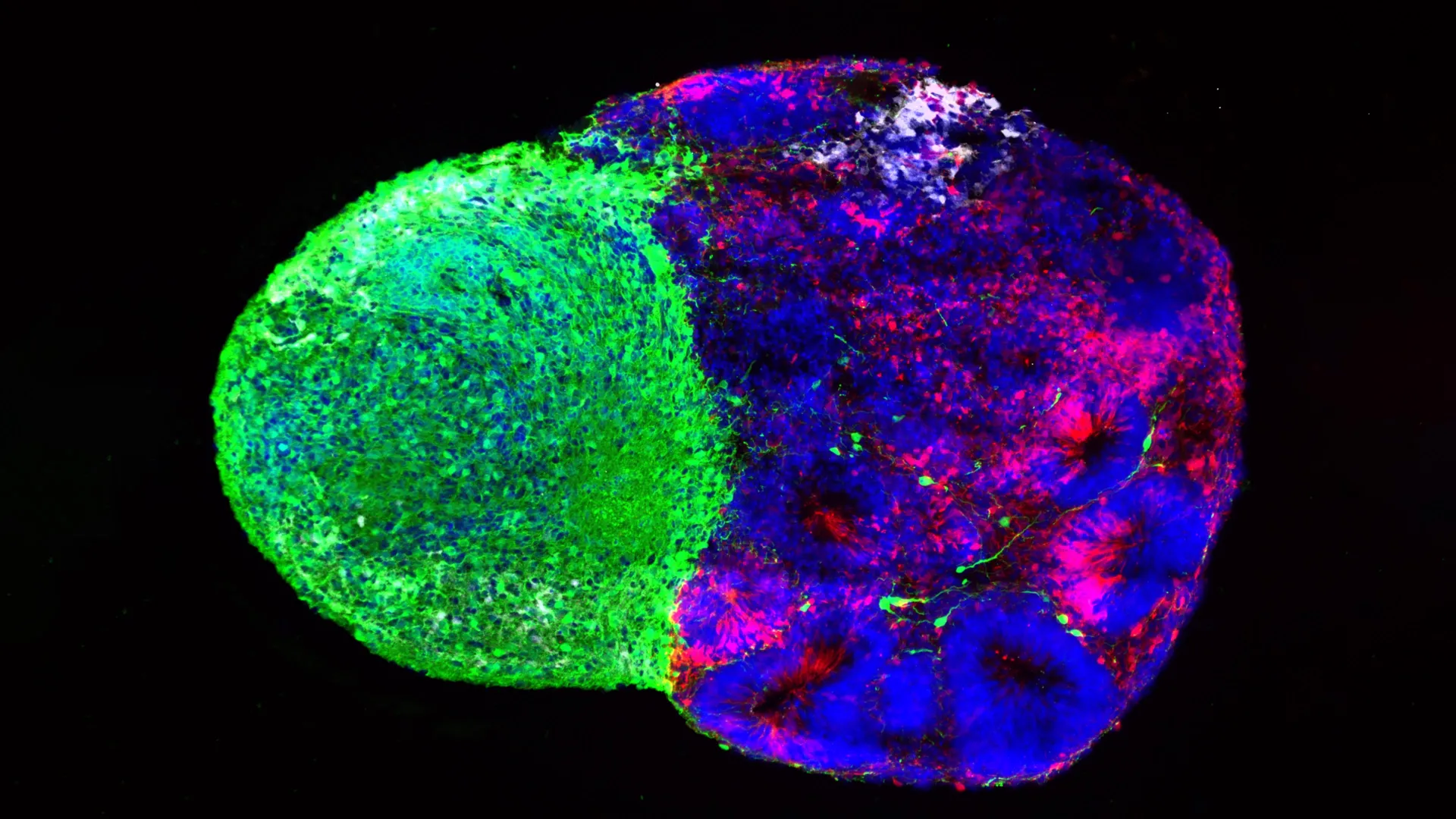
- The Science study, led by first author Claudia Nguyen, used human brain assembloids to show that thalamic projections physically touch radial glia during early development, pushing them to produce more excitatory upper-layer neurons — the cell type especially expanded in the human brain — and that this contact 'very likely does not exist in rodents.'
- The team linked the thalamic effect to NRXN1, a gene previously tied to autism spectrum disorder, finding that assembloids made from patient cells carrying an NRXN1 mutation produced altered thalamic signals that shifted the balance between stem cells and neurons.
- Principal investigator Aparna Bhaduri, an assistant professor at UCLA's David Geffen School of Medicine, framed radial glia as 'really key to making us human' and noted that the same cells reappear in brain cancers, so understanding their decision-making could inform both neurodevelopmental disorders and oncology.
- Both studies were built on brain organoid and assembloid models — technology Bhaduri said has, over roughly a decade, made it possible to investigate uniquely human neural stem-cell behavior that animal models cannot capture.
- The work was funded by the NIH, NSF, the Simons Foundation, the Chan Zuckerberg Initiative, the NIH BRAIN Initiative Cell Atlas Network, and several private stem-cell and neuroscience foundations.
Why it matters: The findings reframe two processes long treated as background — nutrient metabolism and early wiring — as active drivers of which neurons the human brain produces. That shift gives researchers a concrete mechanistic handle on disorders from autism (via the NRXN1 connection) to brain cancer, where similar radial-glia-like cells re-emerge, and shows maternal nutrition may directly shape cortical cell identity.
Ask SkimNews