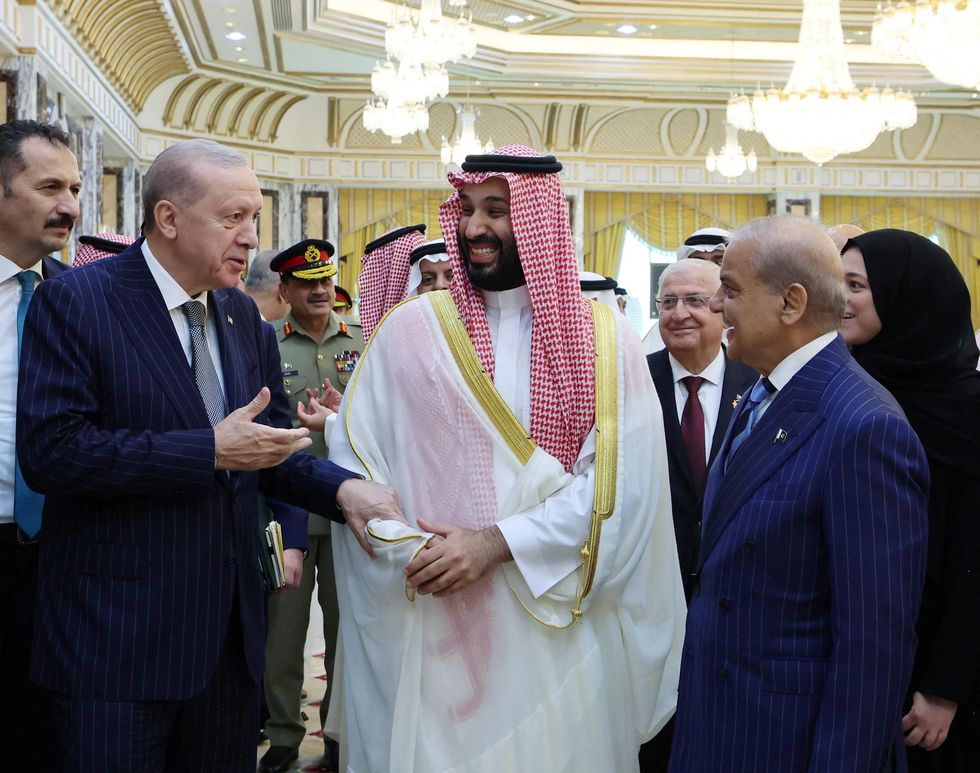
Turkiye details Mecca defence pact with Pakistan, Saudi Arabia — SkimNews

Get the Geopolitics newsletter
Daily geopolitics — wars, elections, sanctions, the diplomatic moves that move markets. Free.
- Turkiye, Saudi Arabia and Pakistan signed the Mecca Joint Defence Agreement on August 7, stipulating that an armed attack against any member would be treated as an attack on all three — a collective defence clause modeled on NATO's Article 5.
- The three countries will establish strategic political and military coordination involving Defence Ministers, Foreign Ministers, and Chiefs of General Staff/Armed Forces Commanders, according to Turkiye's defence ministry.
- Joint military exercises are planned across land, naval and air forces, with specific focus on air defence and unmanned systems, alongside deeper defence industry cooperation on joint development, production, and logistics.
- The ministry identified unmanned and autonomous systems, electronic warfare, and artificial intelligence as priority capability areas for joint development under the pact.
- Turkiye said the pact — which links NATO's second-largest army with nuclear-armed Pakistan and top oil exporter Saudi Arabia — is open to expansion, with Egypt cited as a potential candidate.
- Turkiye separately confirmed it is participating in Jeddah meetings aimed at establishing an international coalition to protect Red Sea shipping.
- Ministry spokesperson Rear Admiral Zeki Akturk said Israel's rejection of the US-proposed 15-point Gaza Plan reflected a 'policy of regional expansionism' and called for a more determined international stance to halt the attacks.
Why it matters: The pact moves Turkiye, Pakistan and Saudi Arabia from bilateral ties to a formal, Article-5-style mutual-defence commitment with ministerial-level coordination, joint exercises, and joint defence industry production in drones, electronic warfare, and AI — with expansion to Egypt explicitly on the table. The parallel push for a Red Sea shipping coalition shows the three are also building operational infrastructure to secure energy and trade routes against attacks.
Ask SkimNews