NHS pilot cuts brain tumour diagnosis from 8 weeks to 2 hours — SkimNews

Get the Health newsletter
Daily health & science — research, biotech, public health, the studies worth knowing. Free.
- NHS England is piloting Oxford Nanopore genomic testing for brain tumours across five specialist centres, cutting diagnosis from up to 8 weeks to roughly 2 hours.link ›
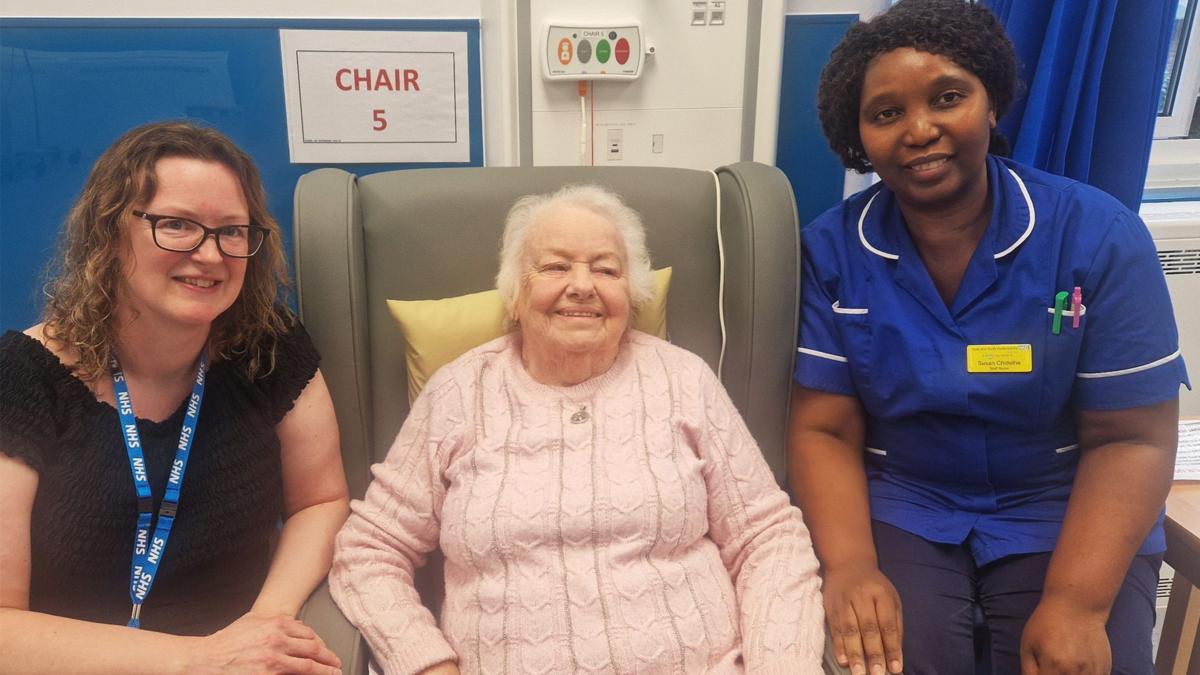
- Steve Palmer, 55, was diagnosed with a grade 4 glioblastoma mid-surgery at Queens Medical Centre after just 20 minutes of nanopore sequencing; consultant Stuart Smith said the technology "seems almost magical."link ›
- Baylor College of Medicine researchers published CS18 in Science Advances — a TopBP1-targeting drug that restored osimertinib sensitivity in resistant lung cancer cells and showed activity across five cancer types in animal models.link ›
- STAT appointed its first reporter dedicated to trust in science — a 34-year-old on a high-dose SSRI who attended a Children's Health Defense conference in Washington and disclosed trying keto, compounded peptides, and NAC.link ›
- Aria announced 14 projects sharing £30m initially to gene-edit swallowtail butterflies, ash trees, and amphibian-skin bacteria, with a further £24m contingent on lab success — and nothing released before 2030.link ›
- Heidi Overton, Trump's FDA nominee, ducked questions on mifepristone and childhood vaccines by pointing to existing approvals; Novo Nordisk paid up to $1.3B to license Nanexa's monthly-dosing PharmaShell tech across up to five programs.link ›
- Wei Gao's team at Caltech built a sweat-sensing patch that matched blood tests for oestradiol (r=0.83) and progesterone (r=0.93) in nine women, needing about 9 microlitres of sweat and 90 minutes per reading.link ›
- A March Canterbury nightclub outbreak infected 21 people within roughly a week, killing 2; Oxford's Martin Maiden team found the strain stole iron-uptake and pilus genes from a harmless Neisseria variant carried by up to 28% of adults.link ›
An NHS pilot collapsed brain tumour diagnosis from eight weeks to two hours. Steve Palmer, 55, learned he had a grade 4 glioblastoma mid-surgery at Queens Medical Centre after an Oxford Nanopore sequencer — running just 20 minutes — told the theatre exactly what the surgeons were cutting. Consultant Stuart Smith called it "almost magical." The test rolls out across five specialist centres in Nottingham, Birmingham, London, and Newcastle, then Bristol, Oxford, Leeds, and Manchester. It anchors a week thick with slower-burn biomedical beats: Baylor's CS18 restored osimertinib sensitivity in resistant lung cancer cells across five tumour types in animal models, and STAT hired its first trust-in-science reporter — a 34-year-old on a high-dose SSRI who attended a Children's Health Defense conference — to figure out why patients are tuning out medicine in the first place.
The stories behind this week
NHS Pilots Rapid Brain Tumour Genomic TestThe pilot targets the roughly 12,000 UK patients diagnosed with a primary brain tumour each year — the biggest cancer killer of children and adults under 40 — turning weeks of agonising waiting into same-day answers. For some patients, mid-surgery diagnosis means surgeons can be radical on curable tumours or more cautious on aggressive ones, lowering the risk of brain damage.

This new drug could break cancer’s resistance to treatmentCancer drug resistance causes most relapses after initial treatment success, and CS18's approach of disabling multiple survival pathways at once could extend the lifespan of existing therapies — osimertinib sensitivity, for instance, was restored in resistant cells. The milestone to watch is whether Baylor can advance CS18 from animal models into human trials.

STAT Names First Trust-in-Science ReporterBy launching a formal trust beat, STAT is institutionalizing coverage of an issue that now cuts through federal health policy under RFK Jr.'s HHS leadership, mainstream medical practice (antidepressants, vaccines, statins), and raw-milk-style fringe debates. The reporter's stated approach — calling out misinformation while explicitly empathizing with skeptics — signals a deliberate editorial shift away from dismissive coverage, though the piece offers no evidence such a shift changes patient outcomes or policy.

Aria Funds £54m Wildlife Gene-Editing ProgrammeBritain is channelling £54m of public money into synthetic biology as a precision tool for conservation, yet the agency's own chair just departed over an Anthropic conflict and a leading biologist says expecting biotech to prevent biodiversity loss is "pretty naive." Because nothing will be released until after 2030, any real-world payoff sits at least a decade out — and the further £24m only flows after measurable laboratory success.

STAT+: Pharmalittle: We’re reading about a reticent FDA commish nominee, a Novo deal, and moreOverton's refusal to stake out positions leaves the Senate and industry uncertain on the future of mifepristone and childhood vaccine approvals under a Trump–RFK FDA, while Novo's $1.3 billion licensing bet shows the Danish drugmaker's push toward less-frequent dosing as its next competitive edge in obesity and diabetes care.

Young Orangutans Build Broader Diets by Copying OthersAcross 21 juveniles followed for their entire dependency period, the finding dissolves a tidy either/or between social and individual learning: limited solo exploration doesn't consign a young orangutan to a narrow diet if it watches its peers closely. For researchers, the implication stated in the paper itself is that adult foraging competence can only be predicted by tracking both learning modes together, not either one alone.

Skin patch that collects sweat could predict ovulationIf validated in larger trials, the patch could give people trying to conceive a continuous at-home read on oestradiol and progesterone — replacing clinic-based ultrasound and the after-the-fact temperature spikes current consumer trackers rely on. Goddard cautioned the key unknown is whether sweat readings predict ovulation early enough to be useful given individual hormonal variability.

Kent meningitis strain stole genes from harmless bacteriaThe Kent cluster killed 2 of 21 infected within roughly a week, exposing how fast a single strain can sweep through socially-mixing young adults. Researchers say the gene-acquisition mechanism could inform better vaccines by targeting the iron-uptake and pilus features, but Maiden warns future invasive strains remain inherently unpredictable — leaving the UK's new menB rollout for incoming students as the practical near-term response.
Why it matters: A brain tumour genomic result in 20 minutes lets a neurosurgeon decide mid-operation how aggressively to cut — radical on curable tumours, cautious on lethal ones — turning oncology from waiting-room anxiety into a real-time surgical input.
Ask SkimNews