Stanford Finds Human Brain Develops From Two Ancient Systems — SkimNews
Get the Health newsletter
Daily health & science — research, biotech, public health, the studies worth knowing. Free.
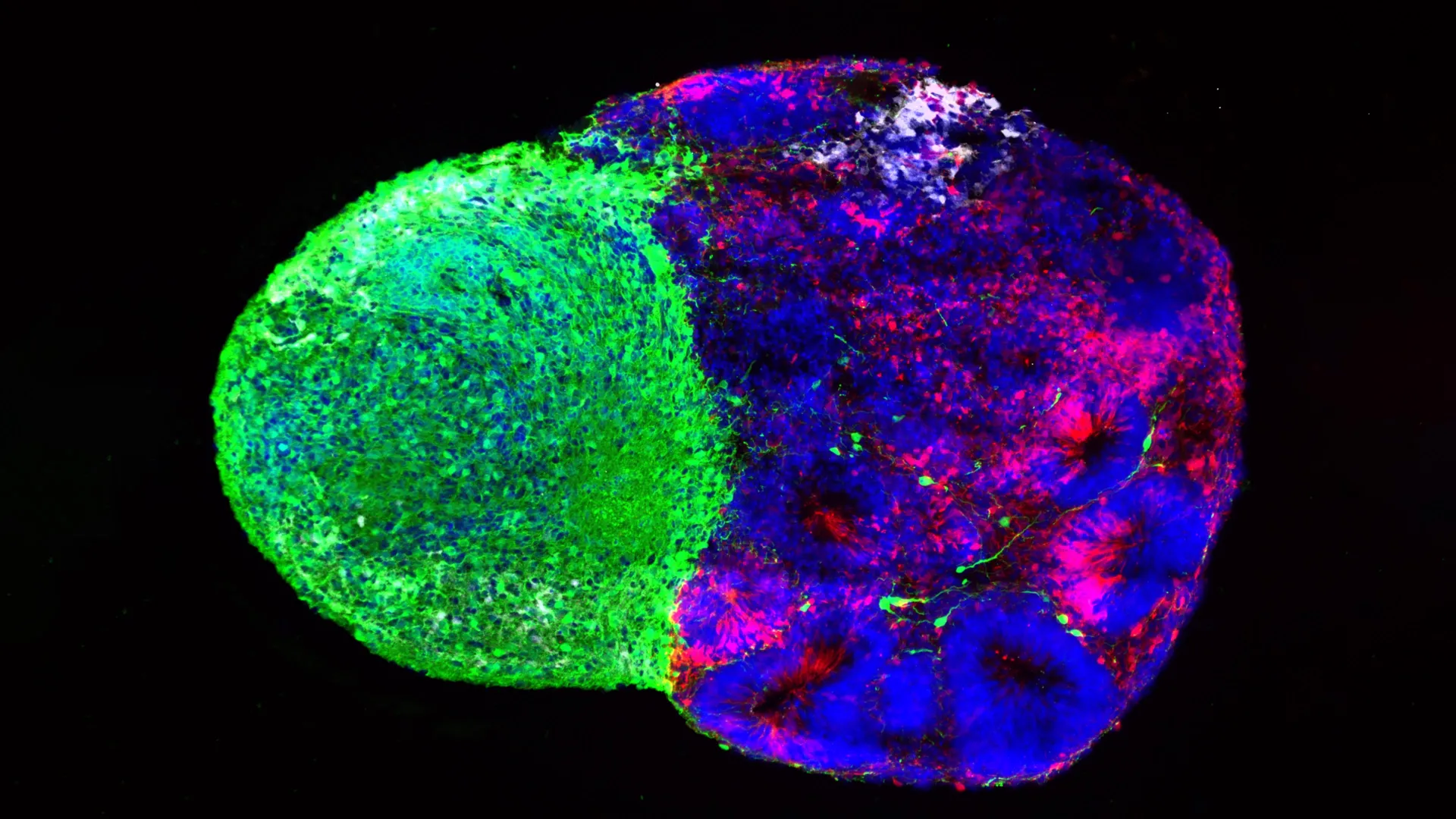
- Kyle Loh and colleagues at Stanford Medicine found that the hindbrain develops in parallel with the forebrain and midbrain from the earliest embryonic stages, marked by distinct progenitor cells expressing different genes (Otx2 vs. Gbx2) and fundamentally different chromatin configurations.
- The two-system split appears in chickens, zebrafish, and acorn worms, suggesting evolution fused two preexisting nervous systems into a single organ more than 500 million years ago.
- Stanford researchers successfully grew functional human hindbrain motor neurons in a dish for the first time, after decades of failed attempts that Loh's team now attributes to scientists wrongly trying to convert forebrain/midbrain progenitors into hindbrain cells.
- The lab-grown hindbrain neurons could accelerate research into ALS and spinal muscular atrophy (SMA), both of which progressively destroy neurons controlling swallowing and breathing — SMA is a leading genetic cause of death in children under 1, while ALS is typically diagnosed between ages 40 and 70.
- Hindbrain circuits also regulate hunger and are among the systems targeted by weight-loss drugs such as semaglutide, a connection the Stanford team flagged as worth investigating given the new developmental model.
- Graduate students Carolyn Dundes and Rayyan Jokhai, co-first authors, traced the split to gastrulation — the earliest stage when the body's basic structure takes shape — overturning the long-held assumption that all brain regions trace back to one progenitor pool.
- The findings were published in Nature Neuroscience on September 18, 2026, with collaborators from Caltech and UCSF and funding from the NIH, NSF, California Institute for Regenerative Medicine, and others.
Why it matters: For ALS and SMA researchers locked out of studying live human brainstem tissue, lab-grown hindbrain neurons offer a long-missing disease model for two fatal neurodegenerative conditions. The dual-origin finding also reframes the brainstem circuits behind swallowing, breathing, and hunger — including the targets of blockbuster drugs like semaglutide — as an evolutionary appendage rather than a developmental afterthought.
Ask SkimNews