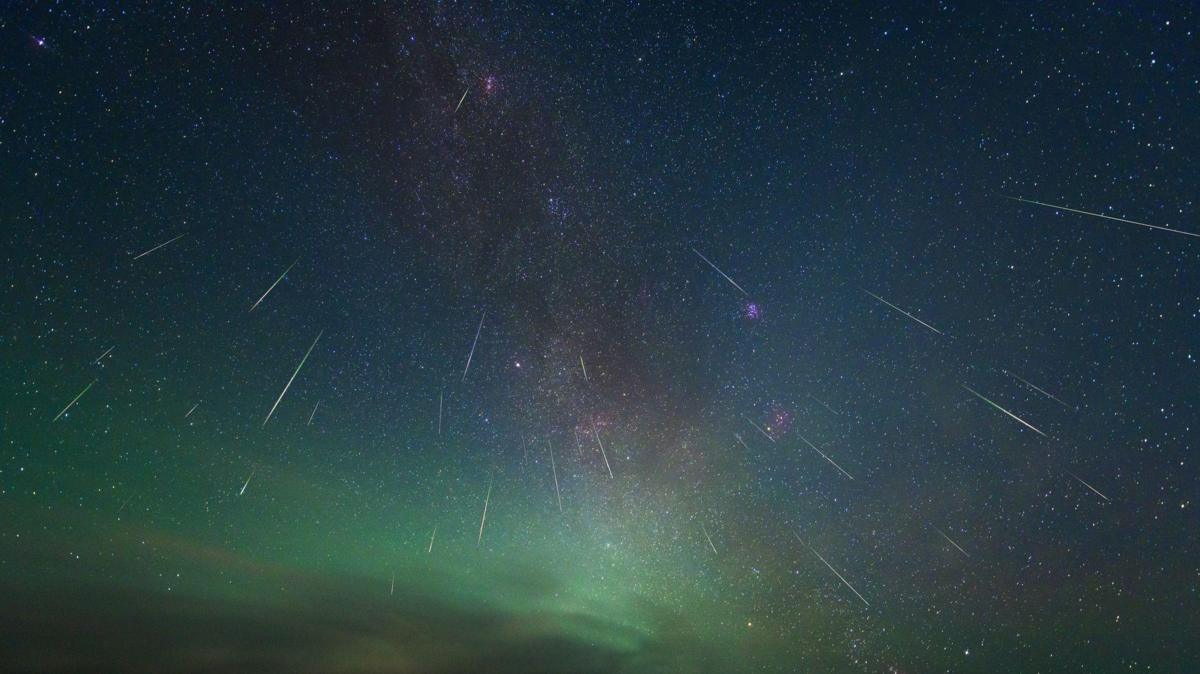
Eta Aquariid Meteor Shower Peaks May 5-6 — SkimNews
Get the Health newsletter
Daily health & science — research, biotech, public health, the studies worth knowing. Free.
- Eta Aquariid meteor shower peaks on the night of 5–6 May, best viewed before dawn when the radiant climbs into the south-eastern sky.
- Halley's Comet is the source of the streaking particles, which were shed from the comet's tail over thousands of years and now spread along its orbit; Earth ploughs through this stream every May, with grains striking the atmosphere at roughly 65 km per second.
- The radiant sits in the constellation Aquarius — the water bearer — and is named after the star Eta Aquarii, the closest star to that point; viewers are advised to look around the radiant rather than at it, as meteors streak outward from it.
- Southern Hemisphere observers get the best show because the radiant sits higher in their sky, though the article notes a bright waning gibbous moon will wash out fainter meteors for everyone this year.
- Viewers can expect roughly a dozen bright meteors per hour despite the lunar interference, as the fine, often persistent trails from burning dust grains remain visible to the naked eye.
Why it matters: The Eta Aquariids are one of only two annual meteor showers produced by Halley's Comet debris, making the May 5–6 peak a reliable — if under-publicized — calendar event for amateur astronomers. With the bright moon suppressing the fainter streaks, this year's shower rewards early-risers who seek out dark-sky locations, particularly south of the equator where the radiant climbs highest.
Ask SkimNews