Type VI retrons: DNA switches toxin on, not off — SkimNews

Get the Health newsletter
Daily health & science — research, biotech, public health, the studies worth knowing. Free.
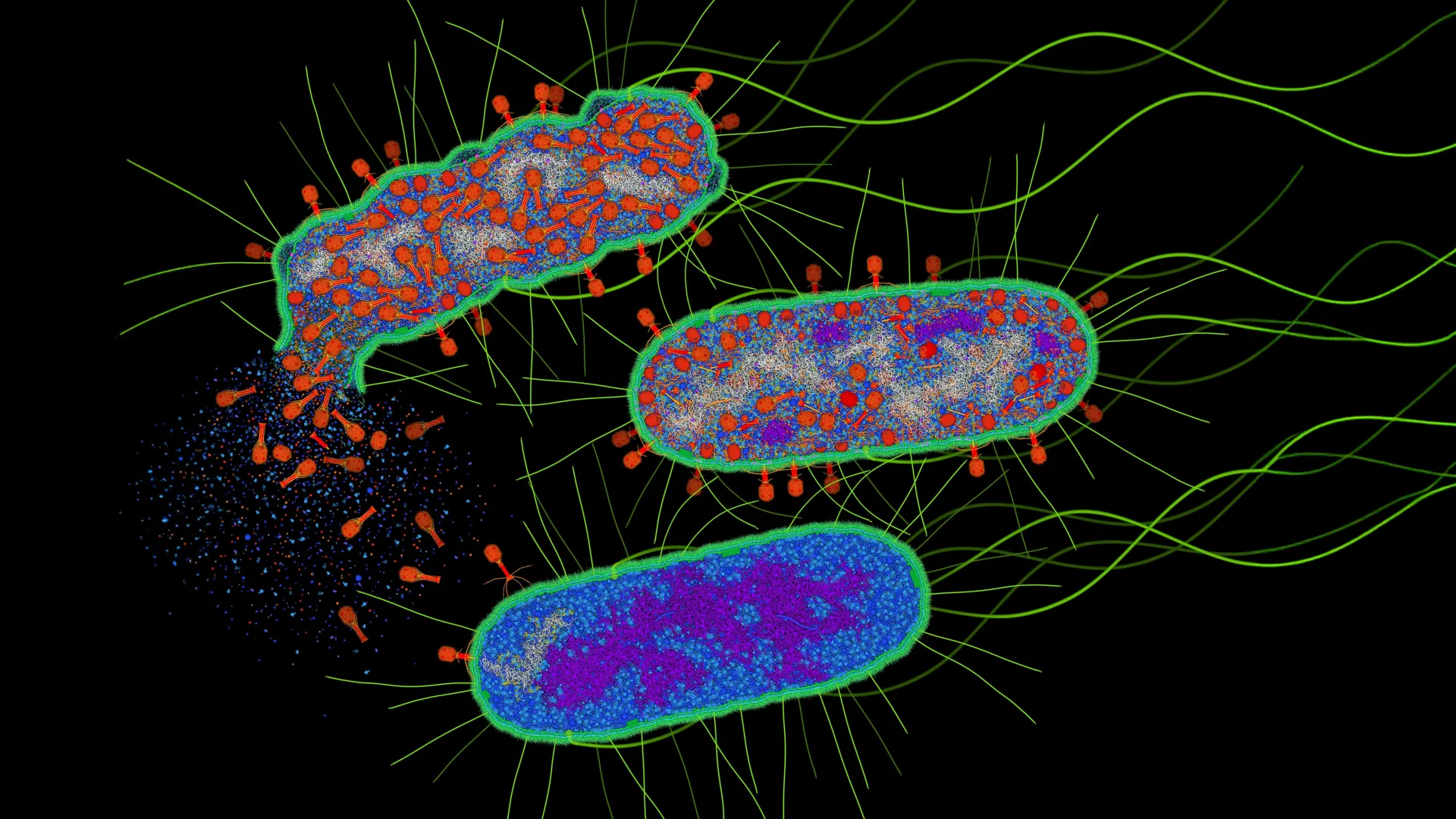
- Type VI retrons reverse the usual retron logic: healthy cells carry little detectable single-stranded DNA and no noticeable toxin, but a phage arrival sharply spikes DNA production, and the DNA then binds an RNA that had been blocking toxin production, lifting the restriction and releasing the toxin.
- The type VI toxin is an exceptionally small protein that inserts into the bacterium's surrounding cell membrane and disrupts its stability, killing the infected cell so the virus cannot make more copies and infect neighboring bacteria.
- Karen Zhang, the PhD student and lead author in Seth Shipman's lab, first flagged the anomaly because type VI retrons lacked the single-stranded DNA signature researchers normally use to detect retrons; standard assays kept failing and the systems looked broken, even though bacteria carrying them still defended against phage.
- Spacer-seq, a CRISPR-Cas-based method developed in Shipman's laboratory, finally exposed a "very, very low level" of single-stranded DNA in uninfected cells, and follow-up experiments confirmed that baseline output jumps substantially only after a phage enters.
- The Molecular Cell paper, "Reverse transcribed ssDNA derepresses translation of a retron antiviral protein," was published on October 13, 2026, by Shipman, Zhang, Matías Rojas-Montero and Darshi.
- Shipman's laboratory is already transforming the machinery into synthetic molecular sensors and switches encoded in DNA and RNA for regulating when genes turn on and off, and is investigating whether the small membrane-disrupting toxins can be adapted into antimicrobial treatments; both applications remain under development.
Why it matters: Published in Molecular Cell on October 13, 2026, the result gives Shipman's lab — already pursuing single-stranded DNA tools for gene editing — a DNA/RNA switch and an exceptionally small membrane-disrupting toxin, and the lab is now exploring each as a gene-activity control and an antimicrobial treatment, both still in development.
Ask SkimNews