Virus Enzyme Triggers Bacterial Self-Destruct Defense — SkimNews
Get the Health newsletter
Daily health & science — research, biotech, public health, the studies worth knowing. Free.
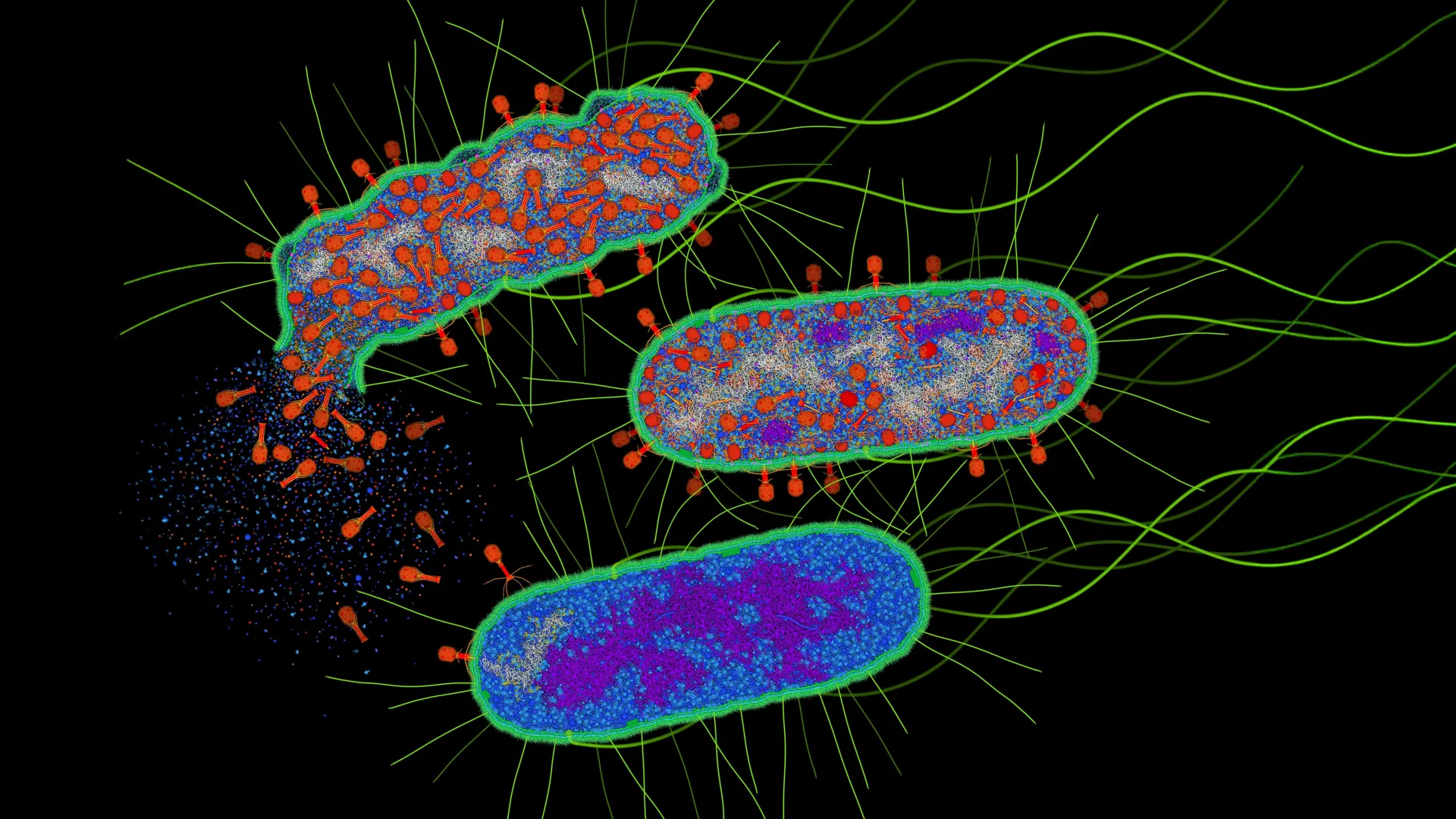
- University of Utah Health researchers identified a new bacterial immune trigger: a phage-produced protease enzyme cuts a bacterial sensor protein, activating the CBASS antiphage defense system.
- CBASS, described as one of the most common forms of bacterial immunity, triggers infected bacteria to kill themselves before phages can spread to neighboring cells.
- Sam Hobbs, PhD, assistant professor of biochemistry at University of Utah Health and first author, called the discovery a 'eureka moment' and said he 'never would have guessed' this mechanism.
- The CBASS detection pathway differs from related antiviral systems because it senses a viral protein's activity on a bacterial host protein rather than recognizing viral genetic material directly.
- CBASS is evolutionarily linked to human immune pathways, suggesting the antiviral defense has been conserved for billions of years since the common ancestor of bacteria and humans.
- The findings, published in Science as 'Phage proteases activate CBASS antiphage immunity,' could help researchers design phage therapies that bypass bacterial immune defenses against antibiotic-resistant infections.
Why it matters: Phage therapy is being pursued as an alternative to antibiotics for drug-resistant infections, but bacterial immune defenses have limited its effectiveness. By revealing exactly how CBASS detects phages, this work gives phage engineers a concrete molecular target to design around, potentially making phage-based treatments more viable against resistant bacteria.
Ask SkimNews