BRICS Summit 2026: Key Takeaways from the New Delhi Declaration — SkimNews

Get the Geopolitics newsletter
Daily geopolitics — wars, elections, sanctions, the diplomatic moves that move markets. Free.
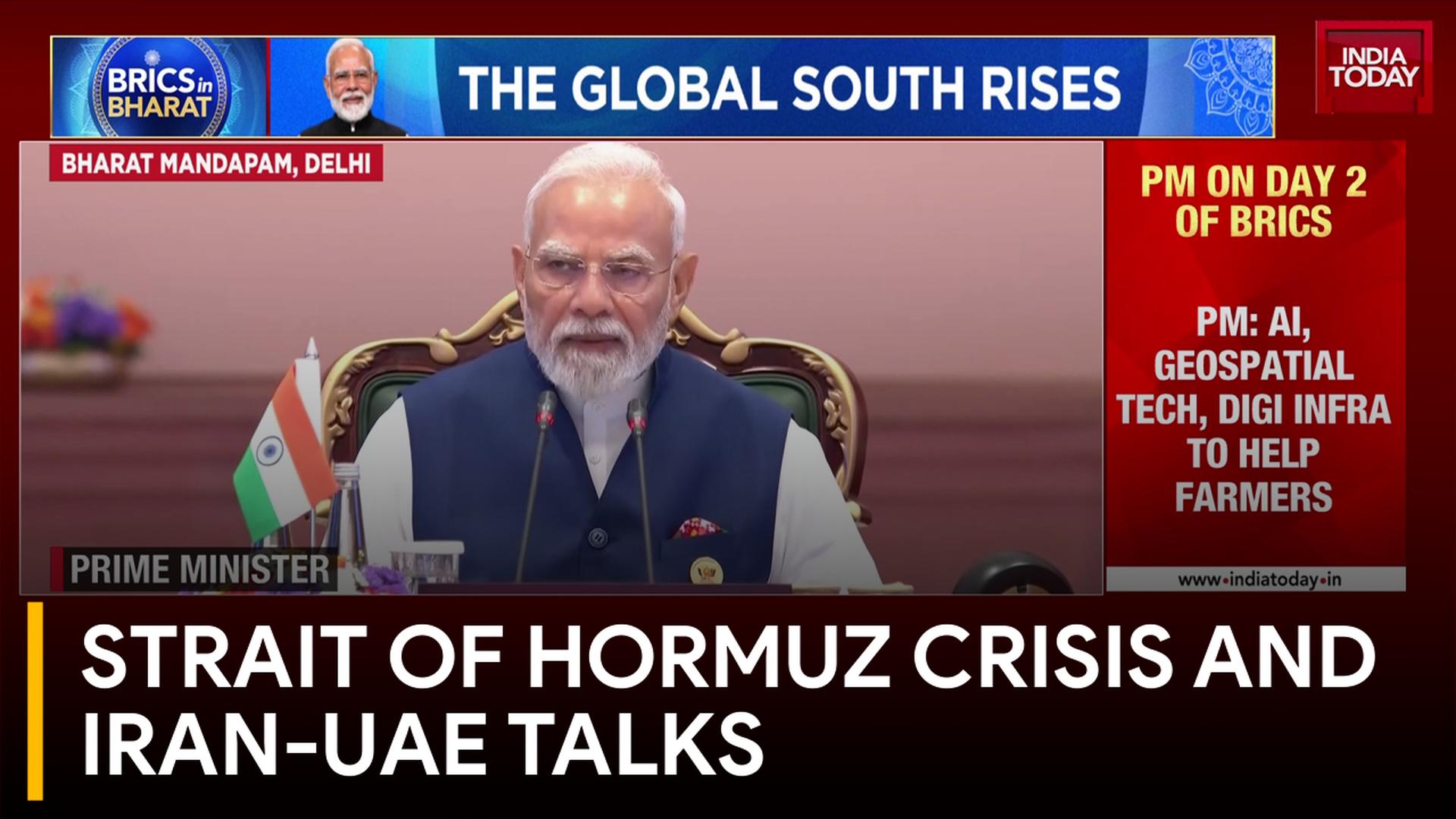
- BRICS adopted the New Delhi Declaration on the first day of its two-day summit, with the 11-member bloc accounting for ~40% of global GDP and nearly half the world's population, despite sharp divisions over the US-Israel war on Iran.
- The declaration avoided naming the US, Israel, Iran, or Gulf states, only calling for 'maximum restraint' and expressing 'deep concern over continued escalation of tensions' in the Middle East.
- The declaration raised concern over 'deliberate attacks on civilian infrastructure and peaceful nuclear facilities' under IAEA safeguards—language analysts viewed as indirect criticism of US-Israeli strikes on Iran's Natanz, Isfahan, and Fordow nuclear sites during the 2025 war.
- BRICS adopted far more explicit language on Palestine, expressing 'firm opposition' to forced displacement, calling for an end to Israel's 'genocidal war on Gaza,' supporting full UN membership for Palestine, and backing a two-state solution based on 1967 borders with East Jerusalem as capital.
- The declaration condemned 'unilateral tariff and non-tariff measures' without naming the US, a significant position for Russia which faces extensive Western sanctions and for India which was hit with a 25% Trump tariff last year over Russian oil purchases.
- Xi and Modi offered their services for Ukraine peace talks and Putin welcomed their readiness, Kremlin spokesman Dmitry Peskov said, while the declaration called for disputes to be resolved through 'dialogue, consultation, and diplomacy' without mentioning Ukraine.
- India worked behind the scenes to secure the declaration, overcoming the biggest hurdle of convincing the UAE and Iran—both BRICS members on opposite sides of the conflict—according to International Crisis Group analyst Praveen Donthi.
Why it matters: The declaration's careful avoidance of naming the US, Israel, or Iran—while still including indirect criticism of nuclear facility strikes and firm language on Palestine—reveals BRICS's value and its limitation: it can preserve consensus and affirm broad principles, but struggles to assign responsibility when member interests collide, as former Indian Foreign Secretary Nirupama Menon Rao noted.
Ask SkimNews