ChatGPT Free Users Now See Ads on 1 in 5 Questions — SkimNews

Get the Tech newsletter
Daily tech — startups, AI labs, chips, the launches that shape the next decade. Free.
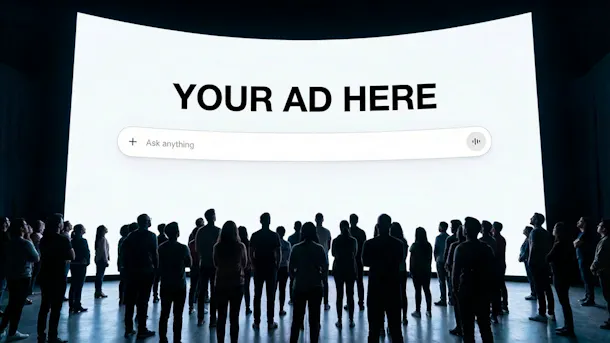
- WIRED's test of 500 ChatGPT questions on the mobile app found ads appeared on roughly 1 in 5 questions in new conversation threads, each tailored to the prompt's topic and featuring a clickable website link button.
- Sam Altman told an audience at Harvard Business School in 2024 that he "hates ads" and called the combination of "ads plus AI" "uniquely unsettling," a stance that now sits in direct contrast to OpenAI's 2026 ad rollout to free US users.
- OpenAI says the ad push is part of a long-term accessibility strategy and is not tied to a rumored IPO, though the company recently discontinued Sora, scrapped an erotic-ChatGPT project, and is streamlining operations around core products.
- Travel questions triggered ads most aggressively: a prompt about planning a Palm Springs trip returned a Booking.com ad whose link automatically searched for hotels in the destination.
- Google's Gemini and Anthropic's Claude do not currently feature sponsored ad buttons in their outputs, and a Wharton professor warned OpenAI that eroding experience quality could push free users straight to those rivals.
- OpenAI plans to extend the pilot to Canada, Australia, and New Zealand, and a March 26 update on its site claims "no impact on consumer trust metrics" and "low dismissal rates of ads."
- WIRED found that naming a brand in a prompt sometimes surfaced a direct competitor's ad — a "poaching" tactic Columbia's Olivier Toubia identified as a longstanding engine of search advertising now migrating into LLMs.
Why it matters: OpenAI is the first major chatbot maker to embed sponsored ad buttons directly in responses, doing so while Gemini and Claude still do not, which makes the ad experience itself the deciding factor in whether free users stay, upgrade, or switch chatbots. OpenAI is also hiring a "product marketing lead, advertising" to mitigate trust risks, and marketing professors warn that aggressive monetization could permanently undermine the recommendation trust that makes a chatbot useful in the first place.
Ask SkimNews
.jpg)