70%+ of New Solar Built in Trump-Voting States — SkimNews
Get the Energy newsletter
Daily energy & climate — solar, EVs, oil, the policy fights and tech bets shaping the transition. Free.
- Trump-voting states accounted for 8 of the top 10 solar-building states in the first half of 2026 and roughly three-fourths of the national 11+ gigawatts of new solar capacity added in Q2 2026, per the Solar Energy Industries Association report
- Texas and Florida ranked first and third in solar construction, with Indiana, Ohio, and Arizona consistently in the top 10 since 2024; Missouri, Arkansas, Michigan, and Utah also reached the top 10 in some years
- Congress's One Big Beautiful Bill Act ended federal solar tax credits early, with credits for most uninitiated solar farms expiring July 4, 2026, triggering a pre-deadline construction rush that inflated Q2 installation numbers
- Rooftop solar projects have already begun declining in 2026, per the SEIA report, leaving utility-scale farms as the main growth driver going forward
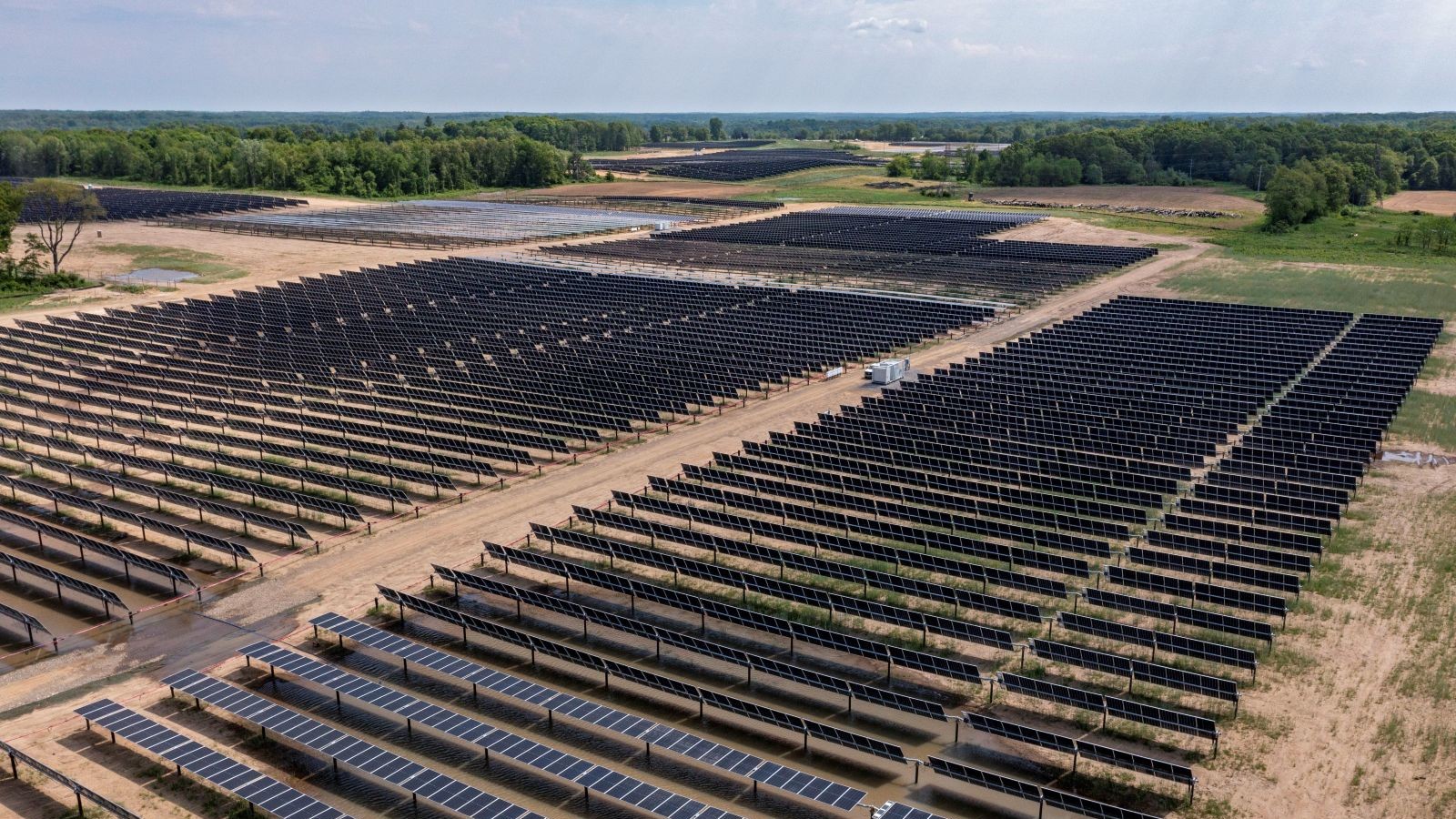
- Michigan climbed from 23rd in 2024 to 4th in H1 2026 despite weaker sunlight, driven by a state law requiring 50% renewable power by 2030 and data center electricity demand
- SEIA CEO Tim Pawlenty, a former Republican governor of Minnesota, attributed red states' solar leadership to a "pro-build mentality," more available land, easier permitting, and demand from data centers and manufacturers relocating to those states
Why it matters: Without federal tax credits, solar's future growth becomes geography-dependent: Sun Belt states like Texas can sustain utility-scale solar on economics alone, while emerging markets like Michigan will lean on state renewable mandates and data center demand to stay viable. The rooftop segment is already contracting, meaning the boom that defined 2024–2026 may narrow to large utility-scale projects in the sunniest red states.
Ask SkimNews