Oxford team captures virus self-assembly in real time — SkimNews
Get the Health newsletter
Daily health & science — research, biotech, public health, the studies worth knowing. Free.
- University of Oxford researchers used mass photometry to track the real-time assembly of virus-like particles, capturing molecular steps previously too fleeting to observe.
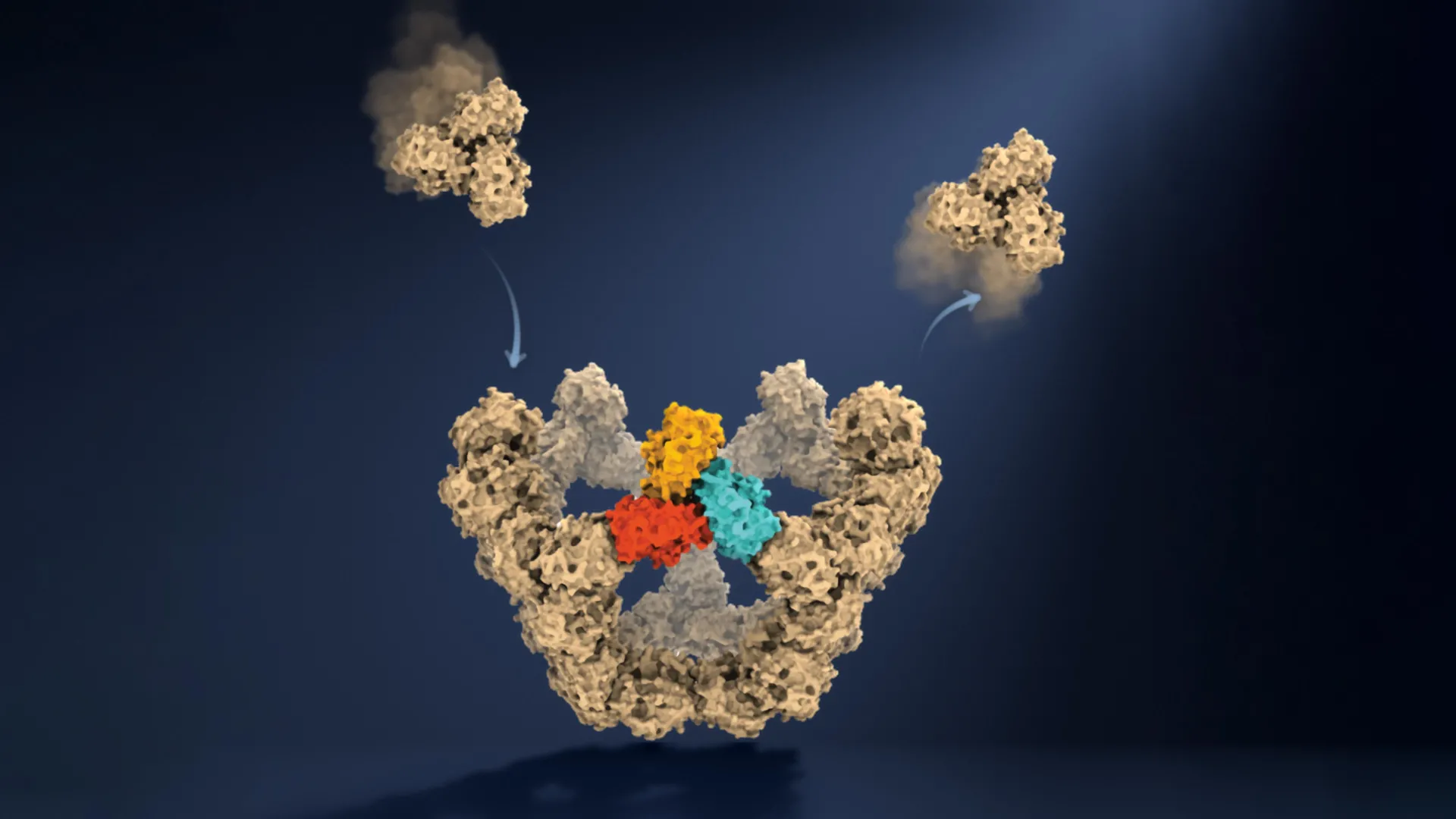
- Dr. Roi Asor identified a key molecular turning point in viral assembly—the formation of a stable pentagonal ring—that accelerates construction once achieved.
- Dan Loewenthal developed a method to confine and continuously observe individual particles, enabling direct 'video'-like tracking of protein additions during assembly.
- Professor Philipp Kukura emphasized that observing single-particle growth allows quantification of interactions and a detailed model of self-assembly, moving beyond theoretical reconstructions.
- Dr. Jack Tan noted the findings could lead to antivirals that disrupt capsid formation and improve engineered virus-like particles for vaccines.
Why it matters: By pinpointing the stable pentagonal ring as a critical checkpoint, the discovery offers a concrete target for drugs that could block viral assembly—potentially halting infection early—and makes vaccine design more precise by leveraging natural self-assembly rules.
Ask SkimNews