Bacteria Use Virus’s Enzyme to Trigger Self-Destruct — SkimNews
Get the Health newsletter
Daily health & science — research, biotech, public health, the studies worth knowing. Free.
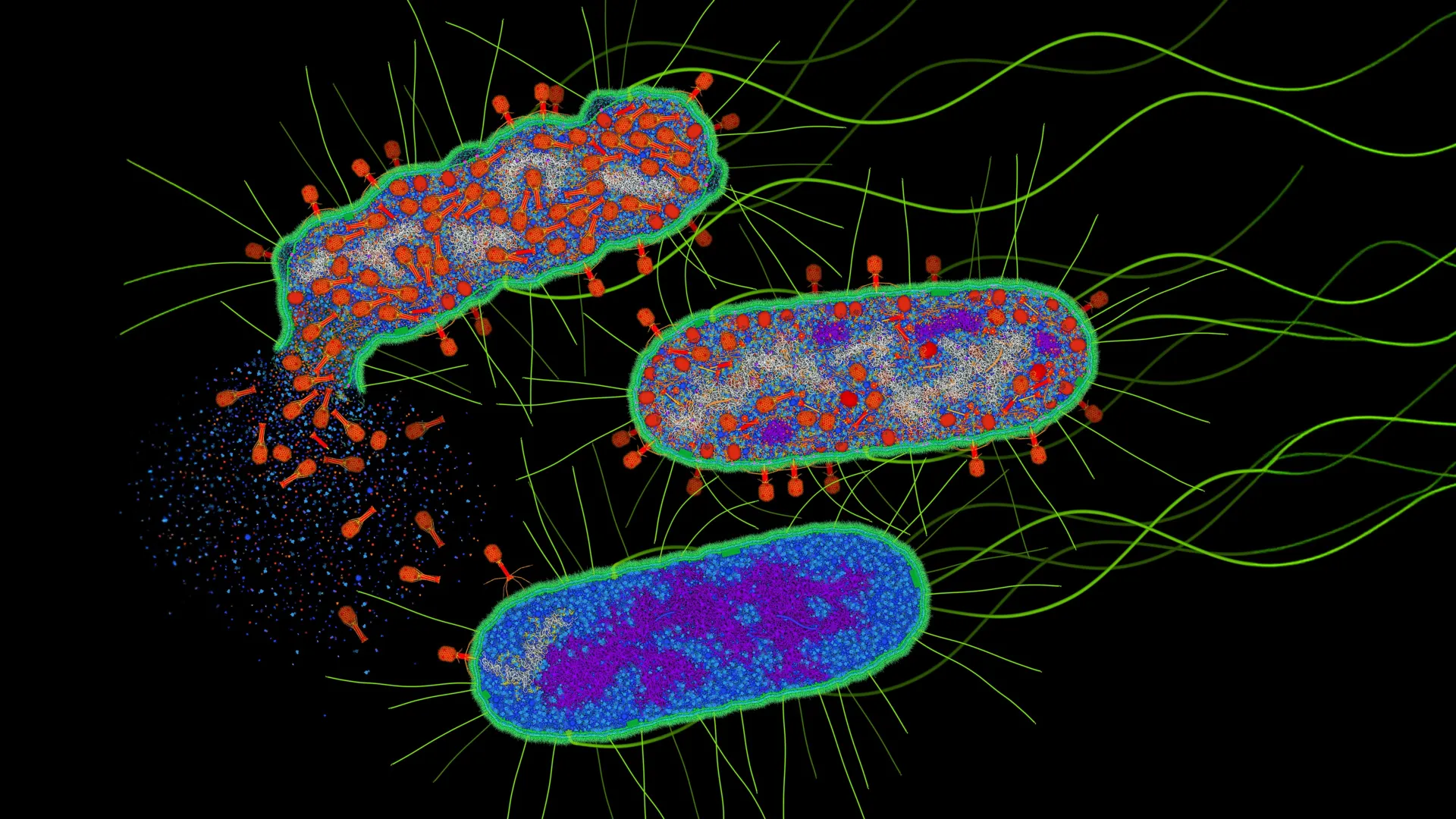
- University of Utah Health researchers identified a new bacterial defense mechanism in which a phage-produced protease enzyme cuts a host sensor protein, activating the CBASS immune system
- CBASS immune system triggers a self-destruct response in infected bacteria, preventing viral spread—a 'last resort' strategy that ensures precise detection of genuine threats
- Phage protease directly modifies a bacterial protein to initiate the immune cascade, marking a novel detection mechanism distinct from systems that recognize viral genetic material
- Sam Hobbs described the discovery as a 'eureka moment,' noting it is one of the most common forms of bacterial immunity and reveals an unexpected activation pathway
- CBASS pathway shares evolutionary roots with a human antiviral immune pathway, suggesting this defense mechanism dates back to the last common ancestor of bacteria and humans
- Research paper published in Science on October 9, 2026, titled 'Phage proteases activate CBASS antiphage immunity,' details how viral activity becomes the very signal for bacterial defense
Why it matters: This discovery reveals a precise bacterial immune trigger that uses the virus’s own enzyme against it, offering a blueprint for engineering phages that bypass bacterial defenses—critical for treating antibiotic-resistant infections. The shared evolutionary lineage with human immunity suggests this mechanism has been preserved for billions of years, underscoring its biological importance.
Ask SkimNews