NATO Ankara Summit Affirms Unity, Exposes Fissures — SkimNews
Get the Geopolitics newsletter
Daily geopolitics — wars, elections, sanctions, the diplomatic moves that move markets. Free.
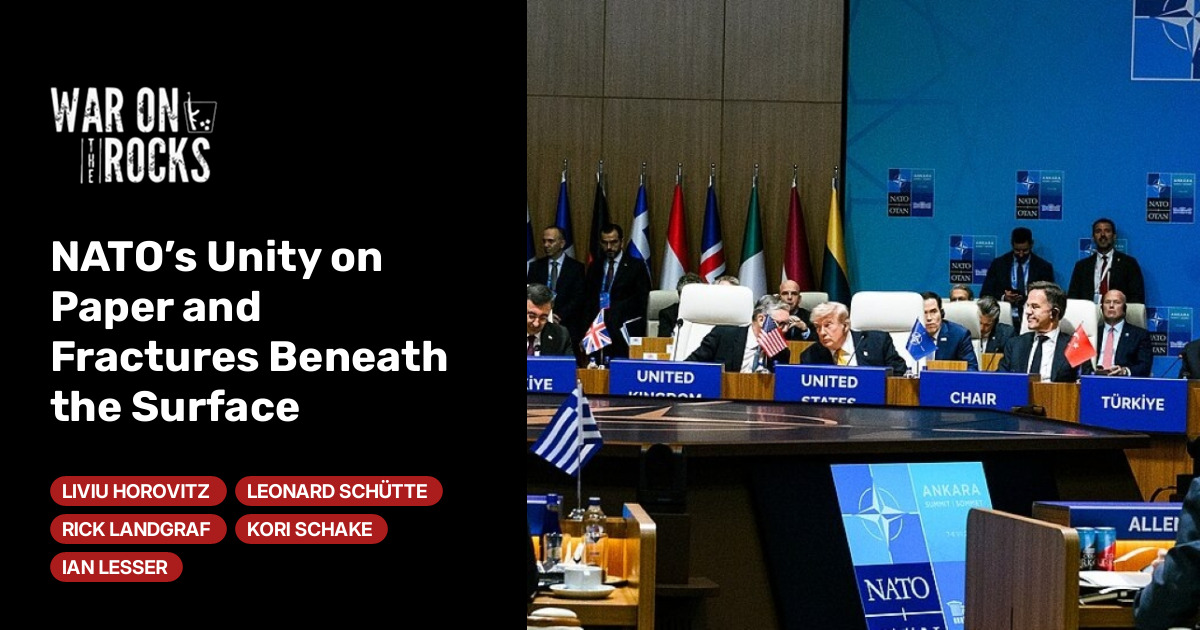
- NATO held its 36th summit in Ankara, Turkey on July 7-8, with the wars in Ukraine and Iran and the future of European defense topping the agenda.
- Trump arrived attacking allies and questioning the alliance's value but departed reaffirming Article 5 and praising its unity, per German Institute researcher Liviu Horovitz.
- The Trump administration is rediscovering that competing with China, managing the Middle East, and containing Russia are easier pursued alongside capable European allies, per Horovitz.
- Russia's determination to continue its war against Ukraine is making European rearmament unavoidable, per Horovitz, framing the summit's real work as implementation: expanding defense production, sharing know-how, and supporting Ukraine.
- Trump threatened to withdraw US troops across Europe and threatened Denmark, the latest reminder that the credibility of the US security umbrella is in tatters, per Harvard Kennedy School's Leonard Schütte.
- European allies have largely accepted US unreliability and stepped up defense efforts, but still need concrete plans on which capabilities are needed and how to take on the deterrence burden, per Schütte.
Why it matters: The Ankara summit crystallized a paradox: Trump personally disrupted NATO's political cohesion with troop-withdrawal threats against Europe and Denmark, yet endorsed Article 5 on departure — leaving five invited experts split on whether institutional machinery or individual volatility now defines the alliance. With Russia pressing its war and US commitment openly questioned, the burden of continental deterrence is shifting to EU rearmament that still lacks a finalized capability roadmap.
Ask SkimNews


