HPV vaccine wipes out cervical cancer deaths under 30 in England — SkimNews

Get the Health newsletter
Daily health & science — research, biotech, public health, the studies worth knowing. Free.
- Peter Sasieni at Queen Mary University of London found no women aged 20–24 in England died of cervical cancer between 2020–2024, the first zero on record versus ~23 expected.link ›
- Vaccinated women aged 30–34 face a 63% lower relative risk of cervical cancer death, and Sasieni estimates ~200 young women already saved and up to 18,000 future deaths preventable.link ›
- UK HPV vaccine uptake has slid from ~90% pre-pandemic to 75% nationally and 60% in London, pushing the elimination target from 2024 to 2050.link ›
- STAT's AI Prognosis newsletter questioned whether Abridge's 'patient centered' branding holds up under scrutiny.link ›
- Paola Tognini's team in Pisa restored neuroplasticity in adult mice by transplanting faecal microbiota from 30-day-old mice — and wiped it out in juveniles with high-dose antibiotics.link ›
- Emily Rogalski's superager study across five US and Canadian sites found social engagement — not diet or exercise — was the single most consistent factor in 80-somethings with 50-year-old memories.link ›
- University of Tsukuba researchers used CRISPR to knock out the DFR gene in red lettuce, redirecting biochemistry toward quercetin with no growth penalty.link ›
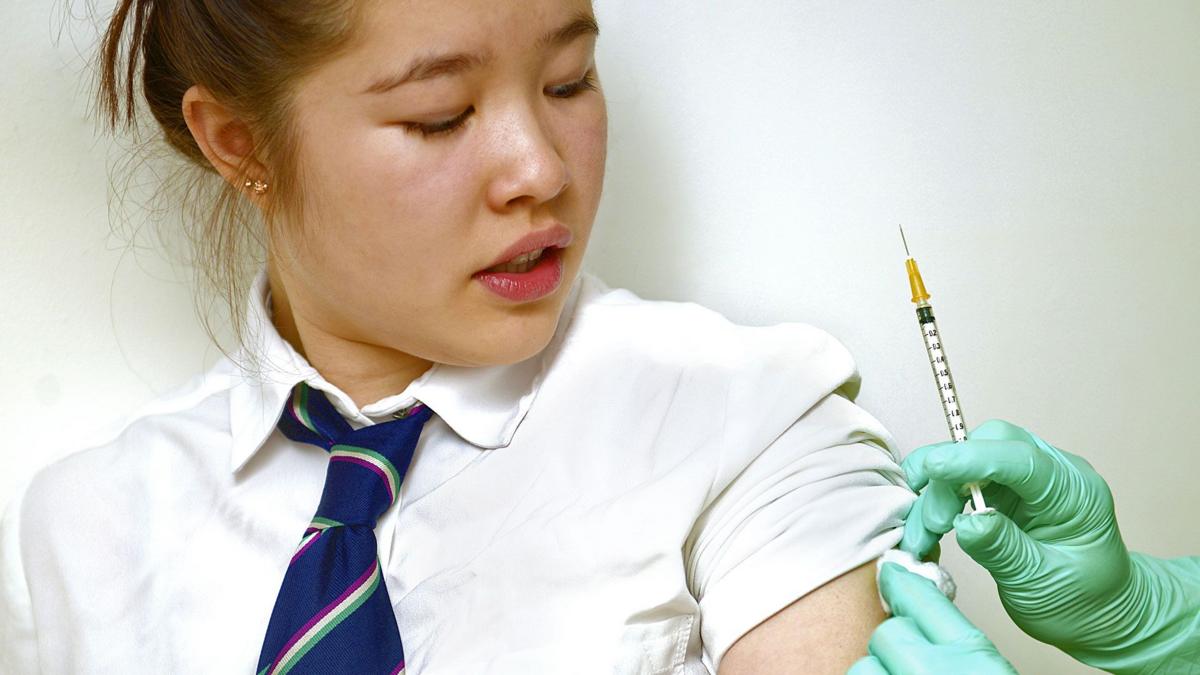
Queen Mary University of London researchers just delivered the most concrete proof yet that vaccines win wars: zero women aged 20–24 in England died of cervical cancer between 2020 and 2024, versus roughly 23 expected based on historical rates. Peter Sasieni's team credits the HPV jab, given to about 90% of that cohort at age 12–13, with preventing nearly 200 young-women deaths since 2008 and up to 18,000 future deaths. But here is the gut-punch: UK uptake has cratered from near 90% pre-pandemic to 75% nationally and a dismal 60% in London. If that does not reverse, Sasieni warns roughly 200 preventable deaths a year will keep stacking up, and Britain's elimination timeline slips from 2024 to 2050.
The stories behind this week

HPV vaccine cuts cervical cancer deaths under 30 toThe study provides the strongest evidence yet that HPV vaccination effectively prevents cervical cancer deaths at the population level, with the historic zero-death milestone in 20-24-year-olds underscoring the vaccine's life-saving power. But the post-pandemic collapse in uptake — from roughly 90% to 75% nationally and 60% in London — means the UK could see an estimated 200 preventable cervical cancer deaths each year and a two-decade delay in elimination targets without swift intervention.

HPV vaccine drives cervical cancer deaths to zeroA generation of English women may be effectively freed from a once-common killer cancer, with researchers projecting up to 18,000 future deaths prevented—but Sasieni warned that post-COVID drops in vaccine uptake could reverse this trajectory, and worldwide vaccination rates remain too low to curb rising cervical cancer mortality.

STAT Questions Abridge's 'Patient Centered' ClaimAbridge has built its brand around the 'patient centered' label, and a skeptical STAT examination puts that marketing language under a spotlight, potentially forcing the company to defend its positioning in a crowded AI clinical-documentation market.

Young-Mouse Gut Transplants Restore Adult BrainIf the mechanism holds in humans, clinicians could one day use microbiome-targeted therapies to reopen windows of brain plasticity in adulthood, potentially helping stroke recovery, amblyopia treatment in adults, or age-related cognitive decline. But the antibiotic arm of the same study warns that disrupting the gut during development may permanently impair plasticity — making the gut-brain axis a double-edged clinical target that could be both therapeutic weapon and iatrogenic risk depending on timing.

Fossils Reveal Early Tetrapods Skipped Tadpole StageThe textbook narrative of land colonization has long hinged on a metamorphic leap — fish with tadpole-like larvae eventually growing limbs and walking ashore. This evidence suggests that transition was far more gradual: animals already built like adults simply started spending more time on land. It rewrites a foundational chapter in evolutionary biology used to teach how vertebrates, including humans, came to live on solid ground.

How 'Superagers' Keep Their Memory Sharp at 80+For a population increasingly anxious about dementia, the superager study reframes Alzheimer's research from asking what goes wrong to what goes right — and identifies social engagement, not diet or exercise, as the most modifiable lever for protecting memory into old age, since genetics alone do not explain the difference.

Scientists turned red lettuce green and something surprising happenedRed lettuce already commands premium interest for its polyphenol content, and the demonstration that breeders can reroute its flavonoid pathway toward quercetin with no growth tradeoff gives plant scientists a concrete tool to engineer nutrient-dense varieties — particularly for controlled indoor farming systems.

Jackfruit Latex Gel Regenerates Bone in Gum DiseaseCurrent periodontitis treatments control infection but rarely regenerate the bone and tissue that the disease destroys, and alternatives like guided tissue regeneration and bone grafting produce inconsistent results. If this jackfruit-pomegranate-simvastatin gel proves safe and effective in humans, it could give dentists a locally-delivered option for rebuilding periodontal bone using cheap, plant-derived materials — while avoiding the dose-limiting side effects that have constrained oral simvastatin use.
Why it matters: If uptake does not recover from its current 75% national, 60% London floor, Britain is on track to eliminate cervical cancer by 2050 — a full quarter-century after the original 2024 target — with roughly 200 preventable deaths per year accumulating in the meantime.
Ask SkimNews