Joints primed for arthritis before birth — SkimNews
Get the Health newsletter
Daily health & science — research, biotech, public health, the studies worth knowing. Free.
- University of Oxford researchers identified that proximal interphalangeal (PIP) joints contain more PI16+ fibroblasts and larger synovial tissue volumes than distal interphalangeal (DIP) joints, a difference present before birth.
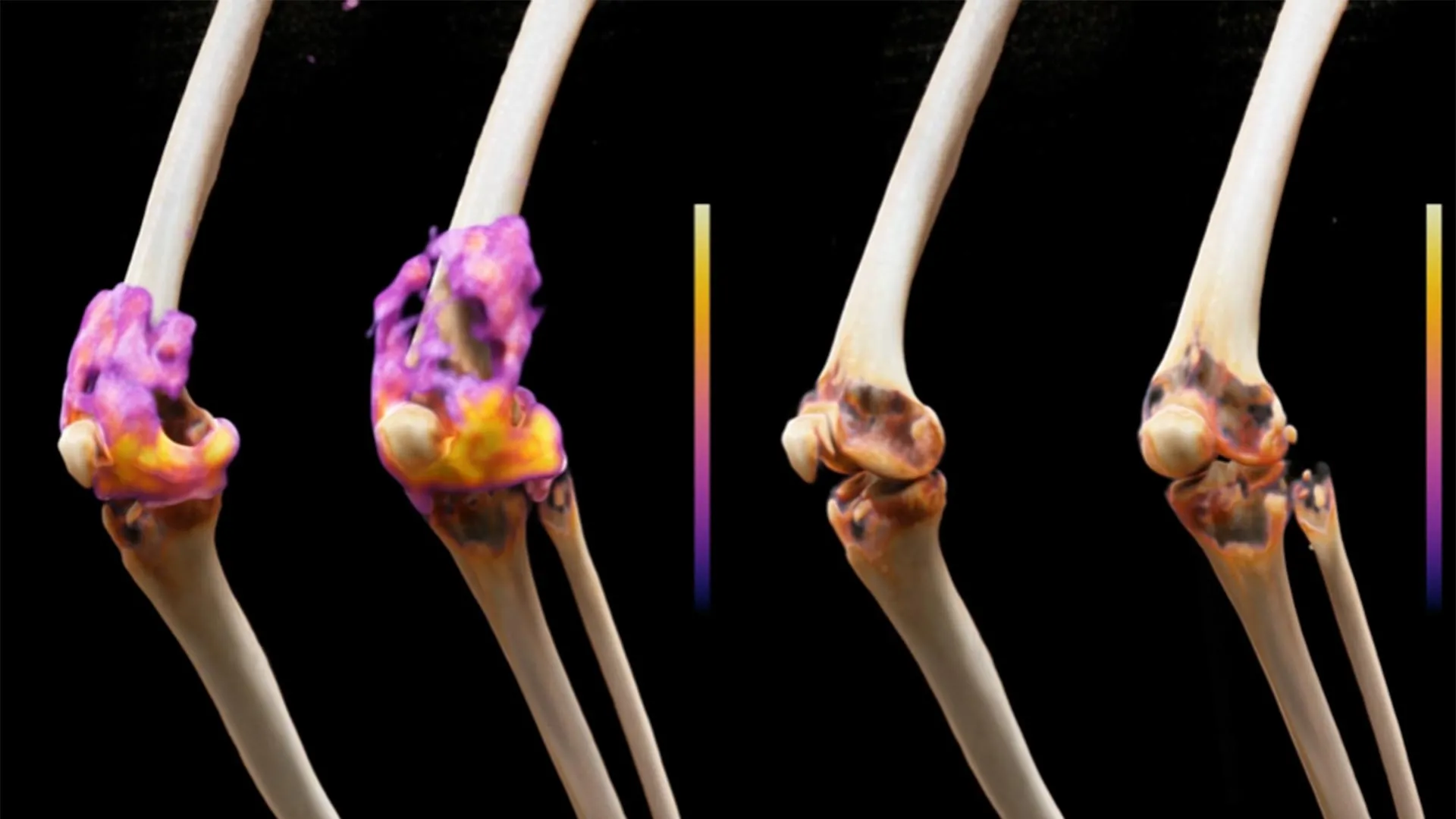
- Kennedy Institute scientists used single-cell sequencing and 3D X-ray imaging to map developing human finger joints, revealing structural and cellular differences between arthritis-prone and spared joints.
- PI16+ fibroblasts in PIP joints were found near blood vessels and tendon attachment sites and responded uniquely to inflammatory signals compared to other fibroblast populations.
- Christopher Buckley stated that joint vulnerability to rheumatoid arthritis depends not only on the immune system but also on tissue-level characteristics established during embryonic development.
- The study published in Nature Immunology suggests synovial lining develops from both cartilage and joint fibroblasts, with local conditions like low oxygen influencing cell specialization.
- Dr. Sarah Davidson noted that PI16+ fibroblasts’ location and differential response to inflammation may help determine where rheumatoid arthritis develops years later.
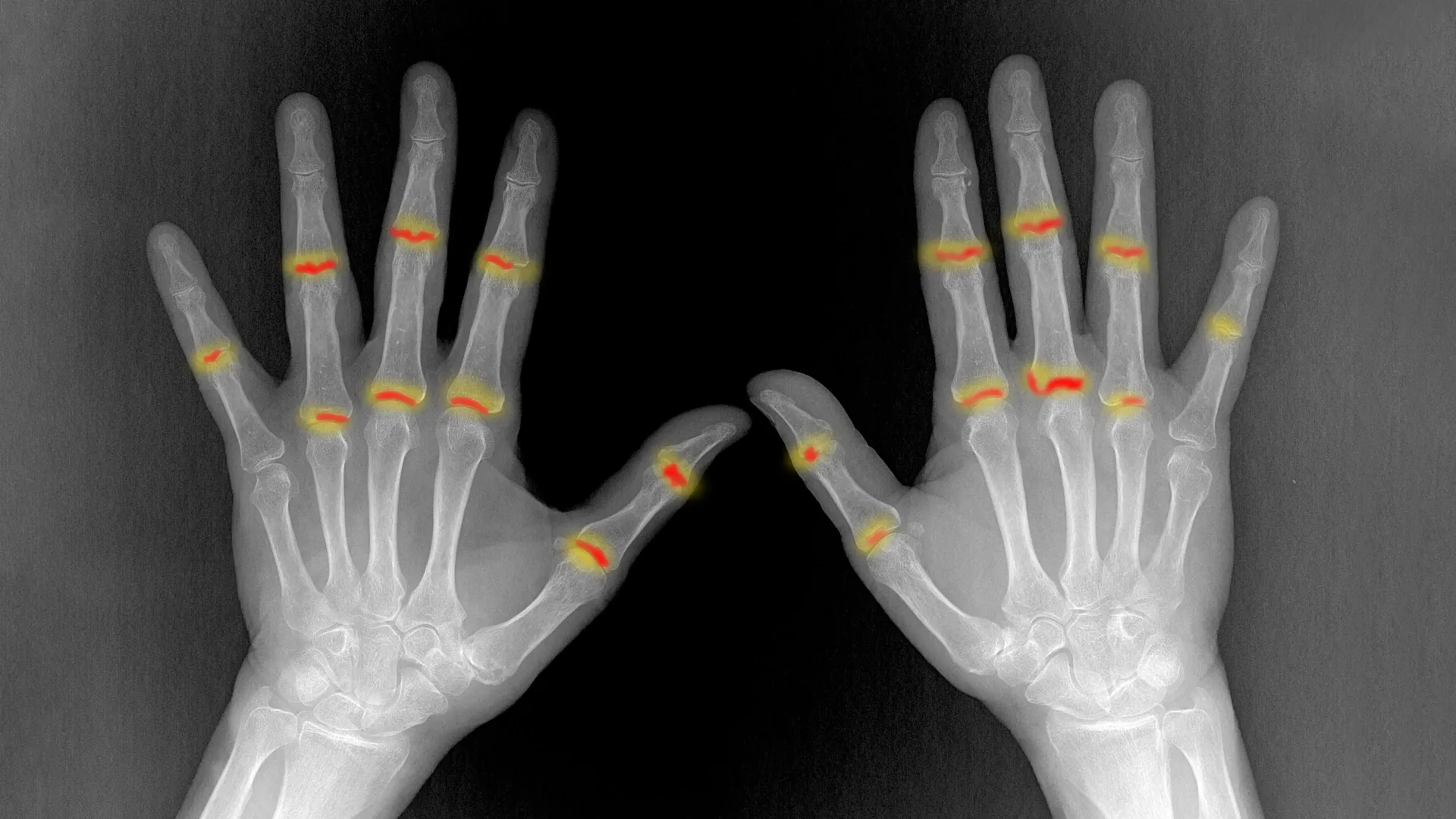
Why it matters: This shifts the understanding of rheumatoid arthritis from being solely immune-driven to including intrinsic joint vulnerability shaped before birth. For patients and drug developers, targeting PI16+ fibroblasts or early developmental pathways could lead to new prevention strategies rather than just treating symptoms after onset.
Ask SkimNews