Rhine hits record low as Europe drought hits shipping, power — SkimNews
SkimNews Take
Simultaneous record lows across the Rhine, Danube, and Po eliminate the geographic redundancy European shipping and power infrastructure normally rely on — when one river falters, the others usually absorb the load, but not this time.
Get the Energy newsletter
Daily energy & climate — solar, EVs, oil, the policy fights and tech bets shaping the transition. Free.
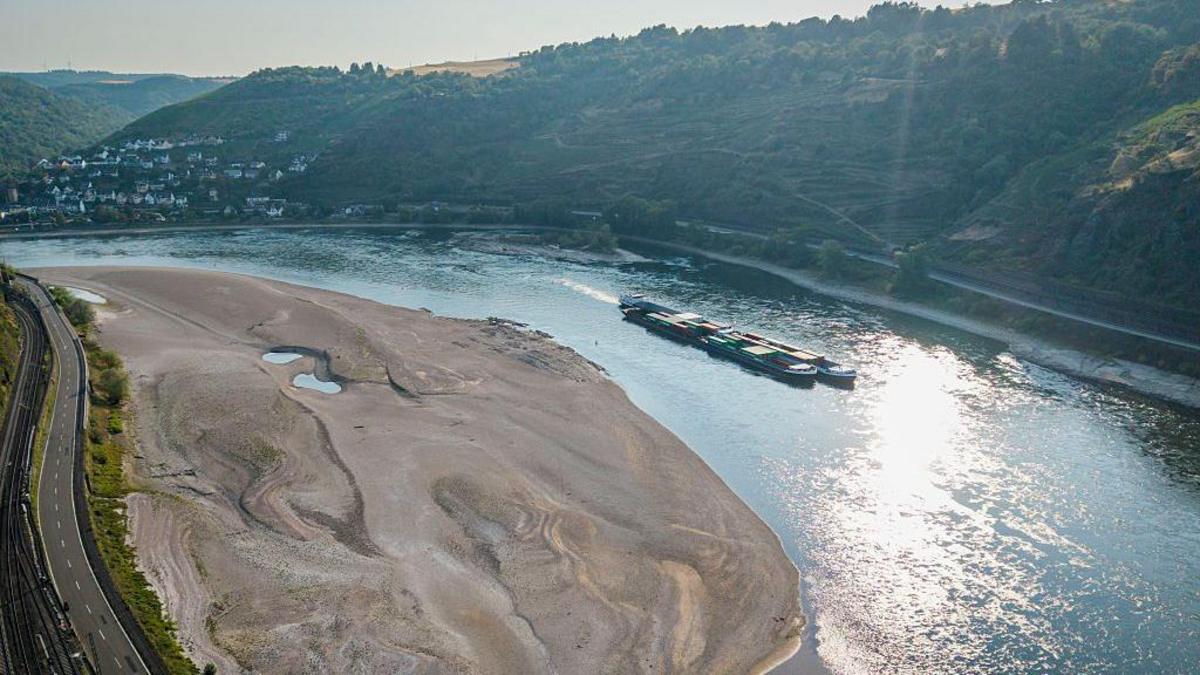
- Rhine levels at Cologne and at Lobith on the Germany-Netherlands border dropped to records last week, lower than at any point since measurements began.
- Germany's Low Water Information System (NIWIS) reported that 44% of Rhine gauging stations and 78% of Danube stations had recorded extremely low water at the end of July.
- The Kaub chokepoint near Koblenz matched the 2018 record low of just 25cm navigable depth on Friday, and Rhine Waterways and Shipping Authority official Martin Wolters said cargo must be spread across more vessels to reduce draught.
- Hungary's only nuclear power plant on the Danube is operating at reduced capacity and risks shutdown, while Serbia cut output at coal plants for lack of cooling water and Romania carried out a controlled explosion on a Danube rock to safeguard flow to the Cernavoda plant.
- Dacia and Ford agreed to halt production at their two Romanian car plants for more than a fortnight to ease pressure on the country's drought-stressed electricity supply.
- Italy's Po hit a historic low near Cremona in late July, authorities raised the drought alert to "high" across the entire Po Valley, and saltwater intrusion from the Adriatic disrupted farmers who draw irrigation water from the river.
- The World Weather Attribution group found no clear long-term trend toward lower rainfall across much of Europe, but concluded human-caused climate change is driving more evaporation, making drought conditions more likely.
Why it matters: Three of Europe's most economically vital rivers — Rhine, Danube and Po — are simultaneously at record lows, and the fallout is already material: Rhine shippers must load vessels lighter, Hungary's sole nuclear plant teeters toward shutdown, Romania has paused Ford and Dacia production for over a fortnight, and Serbian coal output is curtailed. The episode demonstrates how tightly the continent's industrial supply chain and power grid depend on a handful of waterways already stressed by climate-driven evaporation.
Ask SkimNews


